

Welcome to Lofotposten. Planning a trip becomes much easier when all your important details are organized in one place. A travel itinerary template helps you arrange flights, hotels, transportation, activities, reservations, and other trip information without having to search through emails or apps every time you need a detail.
Whether you’re planning a weekend getaway, family vacation, road trip, business journey, or international adventure, a well-organized itinerary can save time and reduce stress. In this guide, you’ll learn what to include in a travel itinerary, how to create one step by step, see a practical example, and discover tips for making your itinerary useful without overplanning your trip.
What Is a Travel Itinerary Template?
A travel itinerary template ek ready-made format hota hai jo trip plan karne mein help karta hai. Is mein aap apni trip ki important information, jaise travel dates, destination, flight details, hotel, transportation, activities aur restaurant reservations, add karte hain.Simple words mein, yeh ek trip ka organized schedule hota hai. For example, agar aap 5 din ke liye kisi city mein ja rahe hain, to itinerary mein likh sakte hain ke kis din kahan jana hai, kis hotel mein stay karna hai, flight kab hai, aur kis activity ki booking already ho chuki hai.
What Does a Travel Itinerary Include?
A travel itinerary includes important trip details such as travel dates, destination, flights, hotel information, transportation, daily activities, restaurant reservations, and booking details. It puts all your travel information in one organized place.
Depending on the trip, it may also include confirmation numbers, addresses, estimated costs, emergency contacts, maps, and notes. The goal is to make important information easy to find and help you stay organized throughout your journey.
A useful travel itinerary usually includes:
- Destination and travel dates
- Traveler names
- Flight or train information
- Hotel and accommodation details
- Rental car or transportation information
- Daily activities
- Restaurant reservations
- Tour and attraction bookings
You don’t need to include every possible detail. The goal is to keep information organized and accessible when you actually need it.
Why Use a Travel Itinerary Template?
A travel itinerary template keeps all your important trip details, such as flights, hotels, activities, reservations, and transportation, in one organized place. This makes planning easier and saves you from searching through different emails, apps, or messages.
It also helps you manage travel time and daily activities more effectively. For group trips, everyone can follow the same schedule and easily access the information they need.
What to Include in a Travel Itinerary Template
The details in a travel itinerary depend on your destination, trip length, and type of travel, but some information is useful for almost every trip. You should usually include your travel dates, transportation details, hotel information, daily activities, reservations, estimated costs, and important contact details. Adding these details keeps everything organized in one place and makes it easier to find important information during your trip.
Basic Trip Information
Basic trip information includes the most important details about your journey, such as your destination, travel dates, number of travelers, departure and return dates, and purpose of the trip. This gives you a quick overview of your vacation before looking at the daily schedule.
You can also include the main destinations you plan to visit and any important travel notes. Keeping these details at the beginning of your itinerary makes the rest of your trip plan easier to understand and follow.
Start your itinerary with the basics:
- Destination
- Departure and return dates
- Number of travelers
- Trip purpose
- Main destinations
- Important travel notes
For example, if you’re visiting several cities, list each destination in the order you’ll visit it. This gives you a quick overview before you get into the daily schedule.
Flight and Transportation Details
Flight and transportation details include important information about how you will reach your destination and travel between different places during your trip. You can include flight numbers, departure and arrival times, airports, train or bus details, rental car information, and booking numbers.
Adding this information to your itinerary helps you stay on schedule and quickly find your transportation details when needed. It also allows you to estimate travel time between different activities and avoid scheduling problems.
For flights, include:
- Airline
- Flight number
- Departure airport
- Arrival airport
- Departure time
- Arrival time
For trains, buses, ferries, or rental cars, include the relevant departure times, pickup locations, reservation numbers, and addresses.
Hotel and Accommodation Information
Add your hotel or accommodation details to the specific dates or destinations where you will be staying. Include information such as the hotel name, address, check-in and check-out times, reservation number, and contact details.
Keeping this information in your itinerary makes it easier to find your hotel, confirm your booking, and plan transportation to and from the accommodation.
Include:
- Hotel or property name
- Address
- Check-in time
- Check-out time
- Reservation number
- Contact phone number
If you’re staying at multiple hotels, keeping these details in your itinerary makes it much easier to find the correct information during the trip.
Daily Activities and Sightseeing
Daily activities and sightseeing show what you plan to do each day of your trip. You can include the activity name, time, location, estimated duration, and any booking or ticket information.
Organizing activities by day helps you manage your time and avoid missing important attractions or reservations. It also makes your itinerary easier to follow while you’re traveling.
For each activity, consider including:
- Time
- Activity
- Location
- Estimated duration
- Transportation
For example, instead of writing only “visit museum,” you could write “10:00 AM — Visit the National Museum — approximately 2 hours — advance ticket required.”
Read also: Best Budget Travel Backpacks: 12 Affordable Picks For Every Type Of Traveler.
How to Plan a Better Day-by-Day Travel Itinerary
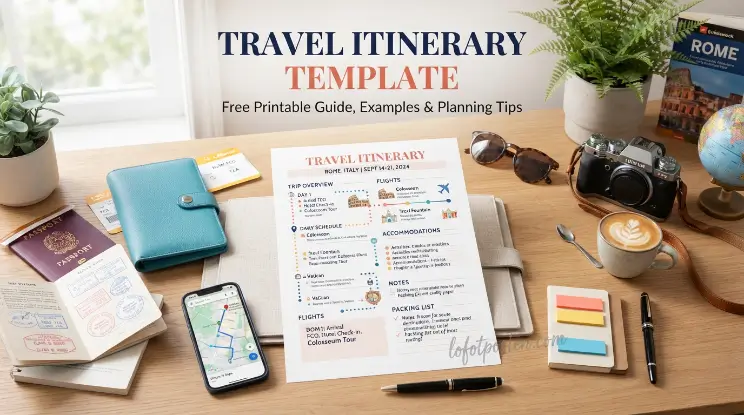
A good day-by-day travel itinerary should help you stay organized without making your trip feel too strict. Instead of planning every minute, include important activities, realistic travel times, meals, and enough free time for rest or unexpected changes. The key is to create a balanced and flexible schedule. Group nearby attractions together, avoid planning too many activities in one day, and leave some extra time between plans. This makes your itinerary easier to follow and allows you to enjoy your trip without unnecessary stress.
Avoid Overplanning
Trying to visit too many attractions in one day can make your trip tiring and stressful. Instead, choose a few important activities and give yourself enough time to enjoy each one.
Leave some free time for meals, rest, transportation, photos, and unexpected delays. A flexible schedule makes your travel itinerary more realistic and enjoyable.
Group Attractions by Location
When planning your itinerary, try to schedule attractions that are close to each other on the same day. This helps you spend less time traveling from one place to another.
For example, you can visit a historic area in the morning, then explore nearby museums, restaurants, or shops later in the day. This saves time, reduces transportation costs, and makes your trip more convenient.
Consider Opening Hours and Travel Time
Before adding an attraction to your itinerary, check its opening hours, closing days, and ticket times to make sure it fits your schedule.
You should also consider the travel time between locations. Traffic, crowds, or busy tourist seasons can make a short journey take longer, so leave extra time between activities to avoid rushing.
Travel Itinerary Templates for Different Types of Trips
Different types of trips require different planning details. A family vacation, business trip, road trip, or international journey may have different schedules, transportation needs, and activities. Choosing the right travel itinerary template helps you organize the information that matters most for your specific trip. This makes planning easier and keeps your travel schedule clear and practical.
Family Vacation Itinerary
A family vacation itinerary should balance fun activities, travel time, meals, and rest so everyone can enjoy the trip without feeling rushed. When traveling with children, avoid scheduling too many attractions or activities in a single day.
Include kid-friendly attractions, meal breaks, transportation details, hotel information, and enough downtime between major activities. You can also leave some free time for unexpected plans, playgrounds, shopping, or simply relaxing at the hotel. This makes the trip more comfortable and enjoyable for the entire family.
Solo Travel Itinerary
A solo travel itinerary should include important details such as accommodation addresses, transportation information, flight details, reservations, and emergency contacts. Keeping these details organized makes it easier to manage your trip and quickly find important information when needed.
It’s also a good idea to share your basic itinerary with someone you trust, especially when traveling alone. Include your hotel details, major destinations, and general travel schedule so they know where you are expected to be during your trip.
Business Travel Itinerary
A business travel itinerary should have a clear and detailed schedule because business trips often include meetings, appointments, flights, and other time-sensitive activities. Keeping everything organized helps you arrive on time and avoid scheduling conflicts.
Include meeting times and locations, transportation details, hotel information, flight details, client contacts, and meal reservations when needed. It’s also important to leave enough travel time between meetings so unexpected delays don’t affect your schedule.
Road Trip Itinerary
A road trip itinerary should include both your destinations and the journey between them. Unlike a regular vacation itinerary, you need to plan driving distances, estimated travel times, fuel stops, rest breaks, and places to stay along the route.
You can also include restaurants, scenic stops, attractions, parking areas, and overnight locations. This helps you stay organized while still leaving room to explore interesting places along the way.
Include:
- Driving distances
- Estimated driving times
- Fuel stops
- Rest areas
- Overnight locations
- Attractions
Don’t forget to account for breaks during long drives.
Common Travel Itinerary Mistakes to Avoid
A travel itinerary is designed to make your trip easier, but poor planning can make it stressful instead. Common mistakes include planning too many activities, ignoring travel time, forgetting important reservation details, and leaving no time for unexpected delays. To create a useful itinerary, keep your schedule realistic and flexible. Include enough time for transportation, meals, rest, and changes in plans. Also, keep important information such as hotel details, booking confirmations, and emergency contacts in one easy-to-find place.
Planning Too Many Activities
Planning too many activities in one day can make your trip tiring and stressful. Trying to visit several attractions without enough time between them may cause you to rush from one place to another and enjoy each experience less.
Instead, choose a few important activities and leave enough time for travel, meals, rest, photos, and unexpected delays. A balanced itinerary gives you more time to enjoy your destination without feeling rushed.
Solution: Leave gaps between activities and include free time.
Ignoring Travel Time
Ignoring travel time can make your itinerary unrealistic. You may plan activities one after another without considering how long it takes to drive, walk, use public transportation, find parking, or travel between locations.
Always add realistic travel time between activities and leave some extra time for traffic, crowds, or unexpected delays. This helps you stay on schedule without having to rush from one attraction to another.
Solution: Include realistic transportation and waiting times.
Keeping Reservation Details in Different Places
Keeping your hotel bookings, flight confirmations, restaurant reservations, and activity tickets in different emails or apps can make them difficult to find during your trip. You may waste time searching for the right confirmation when you need it.
Instead, add important reservation numbers, booking details, addresses, dates, and contact information to your travel itinerary. Having everything in one place makes your trip more organized and helps you quickly access the information you need.
Solution: Add important confirmation numbers, addresses, and booking links to the itinerary.
Forgetting Backup Plans
Travel plans can change because of bad weather, delays, cancellations, unexpected closures, or other problems. If your itinerary depends on one activity, a sudden change can leave you without anything planned for the day.
It’s better to keep one or two alternative activities in your itinerary. For example, if a planned outdoor tour is canceled because of rain, you can visit a nearby museum, café, shopping area, or other indoor attraction instead.
Solution: Keep an alternative activity available in case of bad weather, closures, or cancellations.
Tips for Using a Travel Itinerary Template
Using a travel itinerary template can make your trip planning easier, but it works best when you keep it simple, updated, and practical. Add important information as soon as you make bookings, including flight details, hotel reservations, activities, and transportation.
It’s also helpful to keep a digital and offline copy of your itinerary and share the latest version with your travel companions. Leave some flexibility in your schedule so you can handle delays, changes, or unexpected activities without disrupting your entire trip.
Use these simple practices to get more value from your itinerary:
- Update bookings: Add new details immediately.
- Keep confirmations: Store booking numbers together.
- Add addresses: Include complete locations.
- Check travel time: Use realistic estimates.
- Save offline: Keep a backup on your device.
- Share itinerary: Give it to travel companions.
- Mark flexible plans: Separate confirmed and optional activities.
- Keep a backup: Print an important summary.
Frequently Asked Questions
What should a travel itinerary template include?
A basic travel itinerary should include your travel dates, destinations, transportation, accommodation, daily activities, reservations, and important contact information. You can also add budgets, confirmation numbers, maps, and notes depending on the complexity of your trip.
What is the best format for a travel itinerary?
The best format depends on your needs. Google Docs works well for simple shared itineraries, while Google Sheets and Excel are useful for detailed schedules and budgets. A PDF or printed itinerary is helpful when you need offline access.
How do I make a simple travel itinerary?
Start by entering your destination and travel dates. Add transportation and accommodation details, then organize activities by day and location. Finally, add reservations, travel times, and important contacts before reviewing the schedule for flexibility.
Can I use a travel itinerary template for international trips?
Yes. An international travel itinerary can include everything in a standard itinerary plus passport and visa reminders, airport transfers, travel insurance, local transportation, and emergency information.
Should I print my travel itinerary?
It’s a good idea to keep both a digital and offline copy. You can keep the complete itinerary on your phone while carrying a printed summary containing essential flight, hotel, transportation, and emergency information.
Conclusion
A travel itinerary template is a simple way to keep your entire trip organized from start to finish. By adding your flights, hotel details, transportation, activities, reservations, and important contacts in one place, you can quickly find the information you need and avoid confusion during your journey.
A good itinerary should not make your trip feel too strict or complicated. Instead, it should provide a clear plan while leaving enough time for rest, unexpected delays, and spontaneous activities. Whether you’re planning a family vacation, solo trip, road trip, or international adventure, a well-prepared travel itinerary template can help you save time, reduce stress, and enjoy your trip with greater confidence.
