
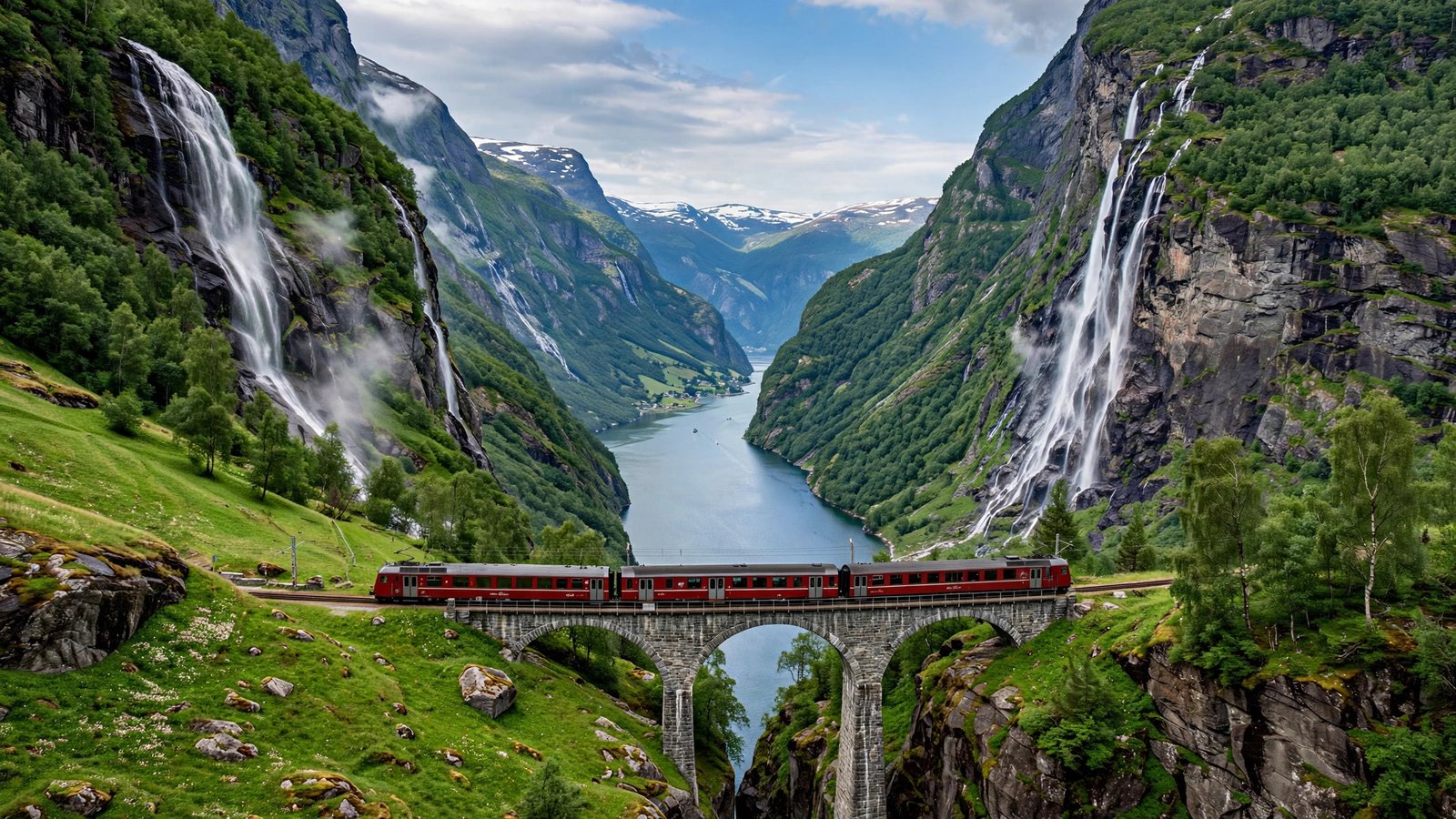
A Norway itinerary 10 days long is the sweet spot for a first visit: long enough to combine the western fjords with the Arctic north, short enough to stay affordable in one of Europe’s priciest countries. The trick is respecting Norway’s scale — this is a country 1,100 miles long, where the scenic route is the slow route, and every good itinerary is built from a few bases rather than a new hotel each night.
Below is our recommended 10-day route, day by day, followed by a compressed 7-day version, a fuller 14-day version, and the self-drive variants. It draws on the places ranked in our best places to visit in Norway guide; adapt the bases, keep the pacing.
Norway Itinerary
The 10-day classic: Oslo → fjords → Bergen → fly north → Lofoten → home.
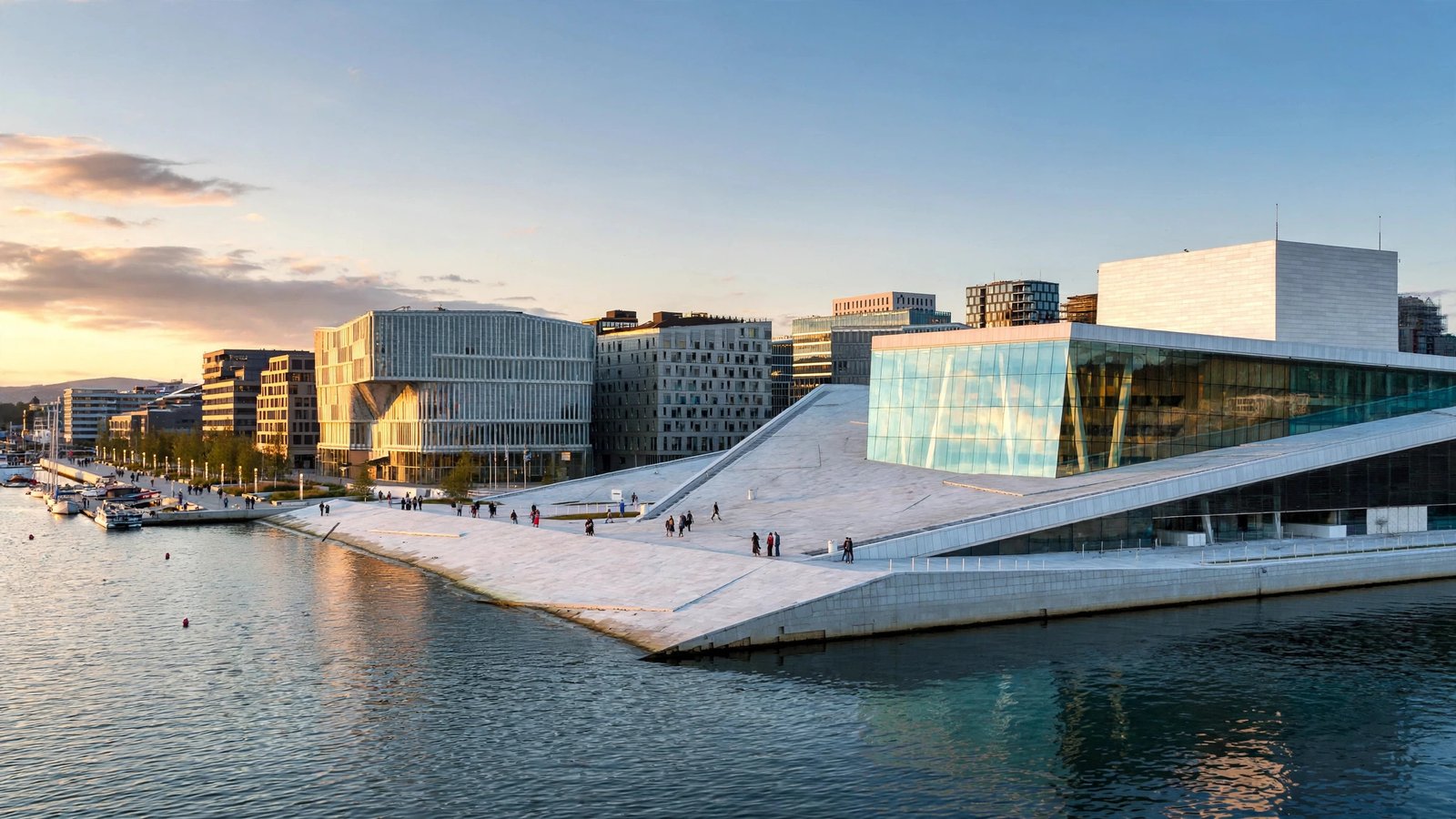
- Day 1 — Oslo. Arrive, shake off the flight at the harbor: walk the Opera House roof, swim-and-sauna at a floating sauna if you are brave, and get an early night. Stay in the center, near the station for tomorrow’s train.
- Day 2 — Oslo. The museum day: MUNCH, the Fram polar ship and the Viking-age exhibitions, then Aker Brygge for dinner. Oslo rewards exactly one full day on a first pass.
- Day 3 — The Bergen Railway to Flåm. One of the world’s great train rides, across the Hardangervidda plateau to Myrdal, then down the Flåm Railway to the fjord. Sleep in Flåm or nearby Aurland.
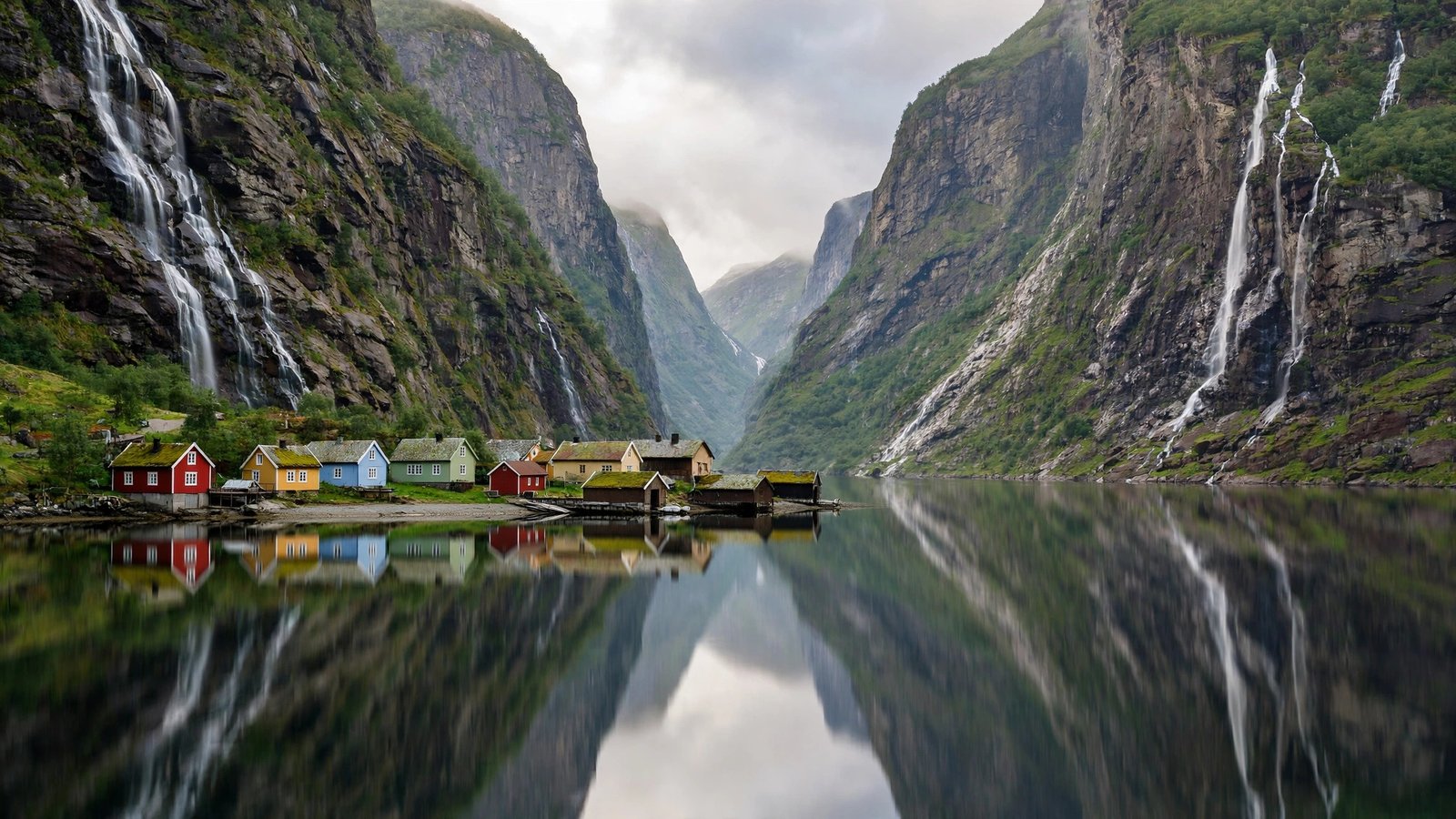
- Day 4 — Nærøyfjord and on to Balestrand or Sogndal. Cruise the UNESCO-listed Nærøyfjord in the morning, then bus/ferry onward along the Sognefjord. A slower day of pure scenery.
- Day 5 — Fjord country to Bergen. Travel the fjord corridor to Bergen (bus + ferry + train combinations all work). Evening at Bryggen wharf and the fish market.
- Day 6 — Bergen. Fløyen funicular, the Hanseatic museum, Bryggen’s alleys, and a weather-flex buffer — Bergen earns a spare half-day against its famous rain.
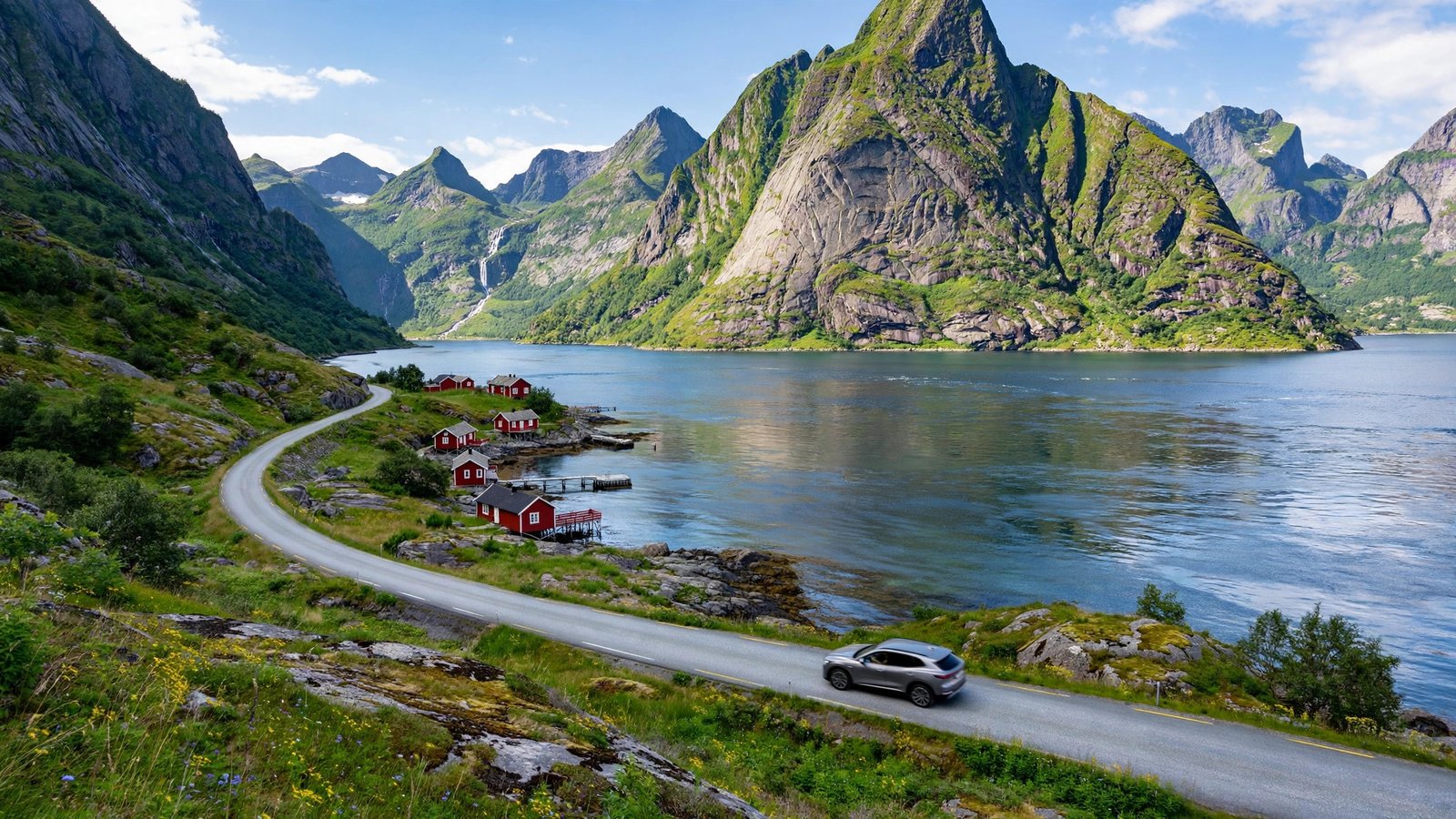
- Day 7 — Fly Bergen to Lofoten. Fly to Bodø and take the ferry to Moskenes, or fly via Bodø to Svolvær/Leknes. Pick up the rental car and settle into a rorbu cabin. (Our Lofoten itinerary 5 days guide details this leg.)
- Days 8–9 — Lofoten. Reine and Hamnøy, the Reinebringen hike, Henningsvær, beaches at Uttakleiv and Haukland, Nusfjord’s preserved fishing village. Two full days minimum; three is better.
- Day 10 — North to home. Ferry or fly back via Bodø to Oslo and connect home — or extend north to Tromsø if your ten days can become twelve.
The route works May to September in full; in winter, swap the fjord focus for more nights in the north (see our best-time guidance in the itinerary notes below).
Norway Itinerary 7 Days
One week forces a choice, and the correct choice for most first-timers is fjords only, done properly: Oslo (1 night) → Flåm Railway and Nærøyfjord (2 nights in Flåm/Aurland) → Bergen (2 nights) → a Geirangerfjord or Hardangerfjord day built in (1 night Ålesund or fjord-side) → out via Bergen or Oslo. This version drops the north entirely and gains breathing room everywhere else.
The alternative 7-day shape is northern only: fly straight to Tromsø (2 nights) → Senja (1 night) → Lofoten (3 nights) → home via Bodø. In winter, this is arguably the best week in Norway; in summer, it is the midnight-sun express. What seven days cannot honestly do is both halves — travelers who attempt it spend the trip in airports and remember the transfers best.
Norway Itinerary 14 Days
Two weeks unlocks the complete first visit: run the 10-day classic above, then add two nights in Ålesund and the Geirangerfjord between the Sognefjord and Bergen, and two nights in Tromsø after Lofoten (fly Lofoten–Tromsø via Bodø), finishing with a day trip into the Lyngen Alps or a coastal-ship leg. The 14-day shape also tolerates a weather day in Lofoten without losing Reinebringen to rain — the single most common casualty of tighter plans.
With fourteen days, consider one indulgence the shorter routes skip: a segment aboard the Hurtigruten or Havila coastal ship — for example Bergen to Trondheim overnight, or the Lofoten-to-Tromsø leg — which combines transport, hotel and sightseeing in a way no road can.
Norway Road Trip
Driving Norway is superb and changes the itinerary math: you trade rail romance for viewpoint freedom. The rules that keep a road trip joyful rather than exhausting:
- Cap driving at 3–4 hours a day. Norwegian roads are scenic and slow; a “short” 150 miles can be five hours with ferries and photo stops, and every hour of it is the holiday, not a transfer.
- Ferries are part of the road. Most fjord ferries need no booking — you queue, board, pay by card or toll account — but they set your rhythm; never plan a same-day flight after two ferry crossings.
- Tolls and ferries are automated. Rental cars bill them through; confirm the arrangement and service fees with the rental company so the final invoice holds no surprises, and check current prices when costing the trip.
- One-way rentals are possible but pricey; circular routes from Bergen or Bodø usually cost less than open-jaw ones.
Norway Fjords Road Trip Itinerary
The classic western loop, from Bergen: Bergen → Voss → Flåm (Nærøyfjord) → Sogndal → the Sognefjellet or Aurlandsfjellet scenic routes (summer only) → Geiranger (via the Gamle Strynefjellsvegen) → Trollstigen → Ålesund → the Atlantic Road → back south via Molde and the fjord ferries to Bergen. Driven unhurried, this loop wants 6–8 days and delivers nearly every postcard in the west.
Drivers should note that several of these roads — Trollstigen, Sognefjellet, Aurlandsfjellet (“the Snow Road”) — are summer-season roads, typically open from late May or June into October, weather deciding. The official Norwegian Scenic Routes site lists each route’s status and architecture stops; check it while planning and again before departure.
Two Week Norway Fjords Road Trip
Stretching the loop to two weeks is less about more miles than about more mornings in the right places. Add: a night in Balestrand for fjord-side calm; a full day in Geiranger for the fjord cruise and the Flydalsjuvet and Ørnesvingen viewpoints rather than a drive-by; a glacier detour to Briksdal in the Oldedalen valley; a night in Åndalsnes under the Romsdal Alps with the Romsdalseggen ridge hike for the fit; and a final slow day on the Atlantic Road with the fishing village of Bud and the Atlantic coast paths. Two-week drivers should also build in one no-drive day per week — laundry, weather and wonder all require them.
Best Way to See Norway
There is no single best transport answer, only the right match per leg: trains for Oslo–Bergen and the fjord rail branches; planes for any jump to or from the Arctic north; ships for the coast between Bergen, Lofoten and Tromsø if the schedule fits; cars for the fjord loops and Lofoten itself, where the E10 spine and village-hopping reward wheels. Most great Norwegian itineraries use three of the four. Public-transport purists can do the whole classic route without a car — the Nutshell-style combinations exist precisely for that — while photographers and hikers will want the car for dawn and dusk freedom.
Best Way to Visit Norway
A few structural habits separate smooth Norway trips from expensive lessons:
- Book north and fjords early in summer — rorbu cabins, fjord hotels and the Flåm Railway sell out for June–August; shoulder seasons (May, September) forgive later booking and feature in our Lofoten trip cost breakdown for their savings.
- Budget honestly. Norway is expensive; self-catering breakfasts and some dinners in cabins with kitchens is the locals-and-regulars strategy, not a hardship.
- Weather-flex every plan. Keep one movable day per base; Norway’s forecasts (Yr, by the Norwegian Meteorological Institute) are excellent at 48 hours and honest about uncertainty beyond that.
- Pack the layers and the waterproofs whatever the month, and real footwear for any trail above a viewpoint path.
The Winter Version of This Itinerary
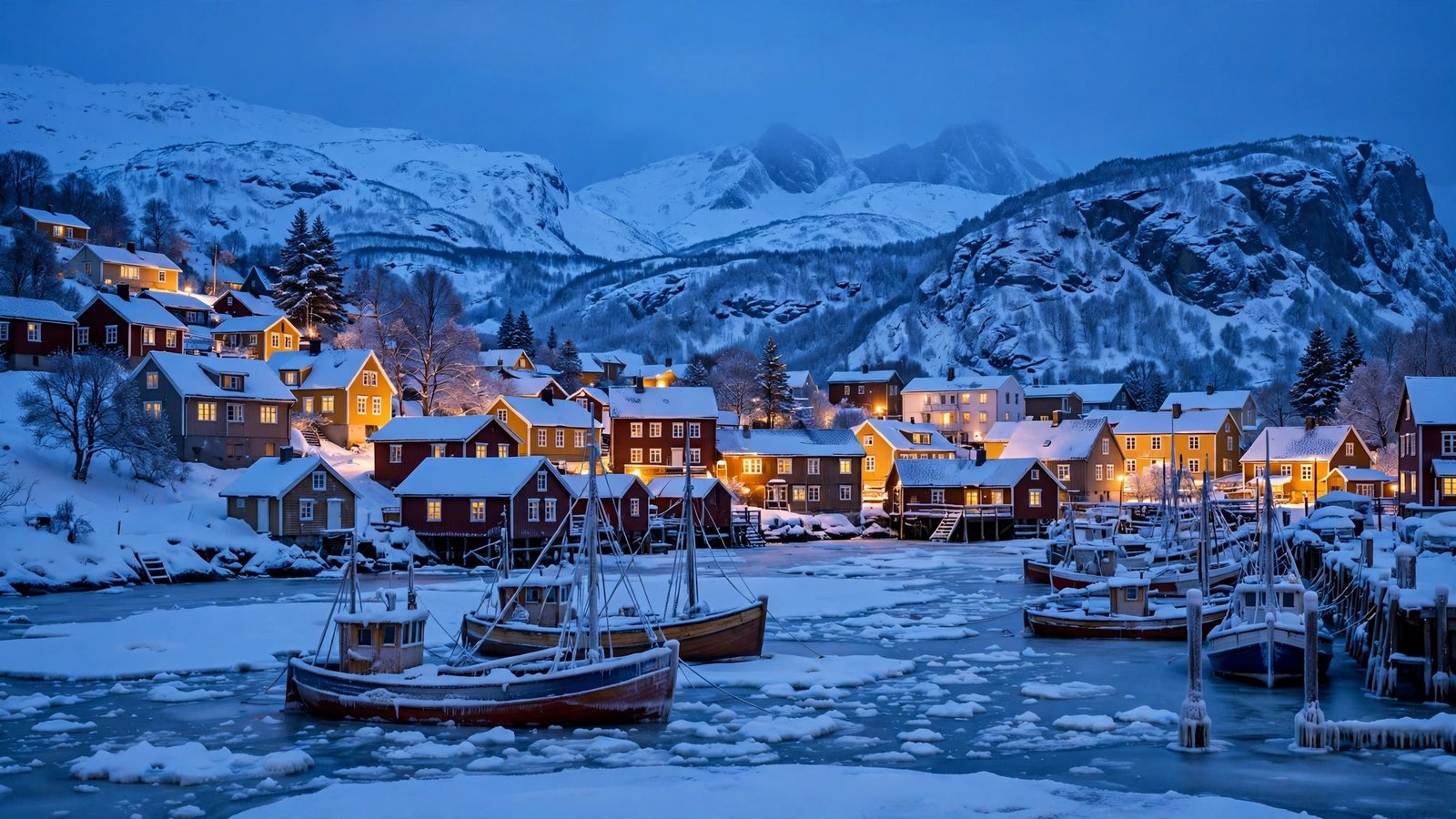
From November to March, rebuild the same ten days around darkness instead of daylight. Keep Oslo (1–2 nights, now with Christmas markets or the February light returning) and Bergen (1 night) as bookends, but move the center of gravity north: fly to Tromsø for 3 nights of aurora hunting, dog sledding and the Arctic Cathedral, then continue to Lofoten for 3–4 nights split between Svolvær and Reine, where the cod fisheries, snow-covered peaks and long aurora nights peak in February.
Replace the fjord-cruise days with the coastal ship: the Hurtigruten or Havila leg between Tromsø and Svolvær, or Svolvær and Bodø, sails through the Lofoten wall and Raftsund in winter light that photographers cross oceans for, and doubles as your transport. Replace hiking ambitions with snowshoe walks, sea-eagle safaris by RIB (running year-round from Svolvær) and storm-watching from a rorbu with a wood stove. Build one full spare day into the northern block — winter weather cancels plans there with some regularity, and the spare day is what turns a cancelled aurora night into a second chance instead of a lost trip.
Driving the E10 in winter is entirely feasible on studded rental tires for confident winter drivers, but daylight is short and conditions change fast; many winter visitors sensibly base in Svolvær, take tours out, and save the full Reine end of the islands for a day trip in good weather or a summer return.
Frequently Asked Questions
Is 10 days enough for Norway? For the classic fjords-plus-Lofoten combination, yes — it is the length we recommend most. It is not enough for the whole country, and no honest itinerary claims otherwise.
Should I visit Tromsø or Lofoten if I only have time for one? Tromsø for winter activities and easy logistics; Lofoten for scenery, hiking and photography. In summer, Lofoten; in midwinter, Tromsø — unless the northern lights plus a rorbu is the dream, in which case Lofoten again.
What is the best month for this itinerary? June for the fullest version — longest days, waterfalls strong, roads opening, crowds not yet at July weight. September is the value-and-aurora alternative.
Can I do this itinerary in winter? Partially: the northern half thrives in winter, but fjord cruises thin out, scenic roads close and daylight shrinks. A winter trip should rebalance nights toward Tromsø and Lofoten.
The Bottom Line
Build your Norway itinerary 10 days around two anchors — the fjord west and Arctic Lofoten — connect them by air, and pace everything else like a Norwegian: unhurried, weather-aware and outdoors first. Seven days means choosing one half and doing it justice; fourteen means adding Geiranger and Tromsø and the breathing room Norway always repays.
