
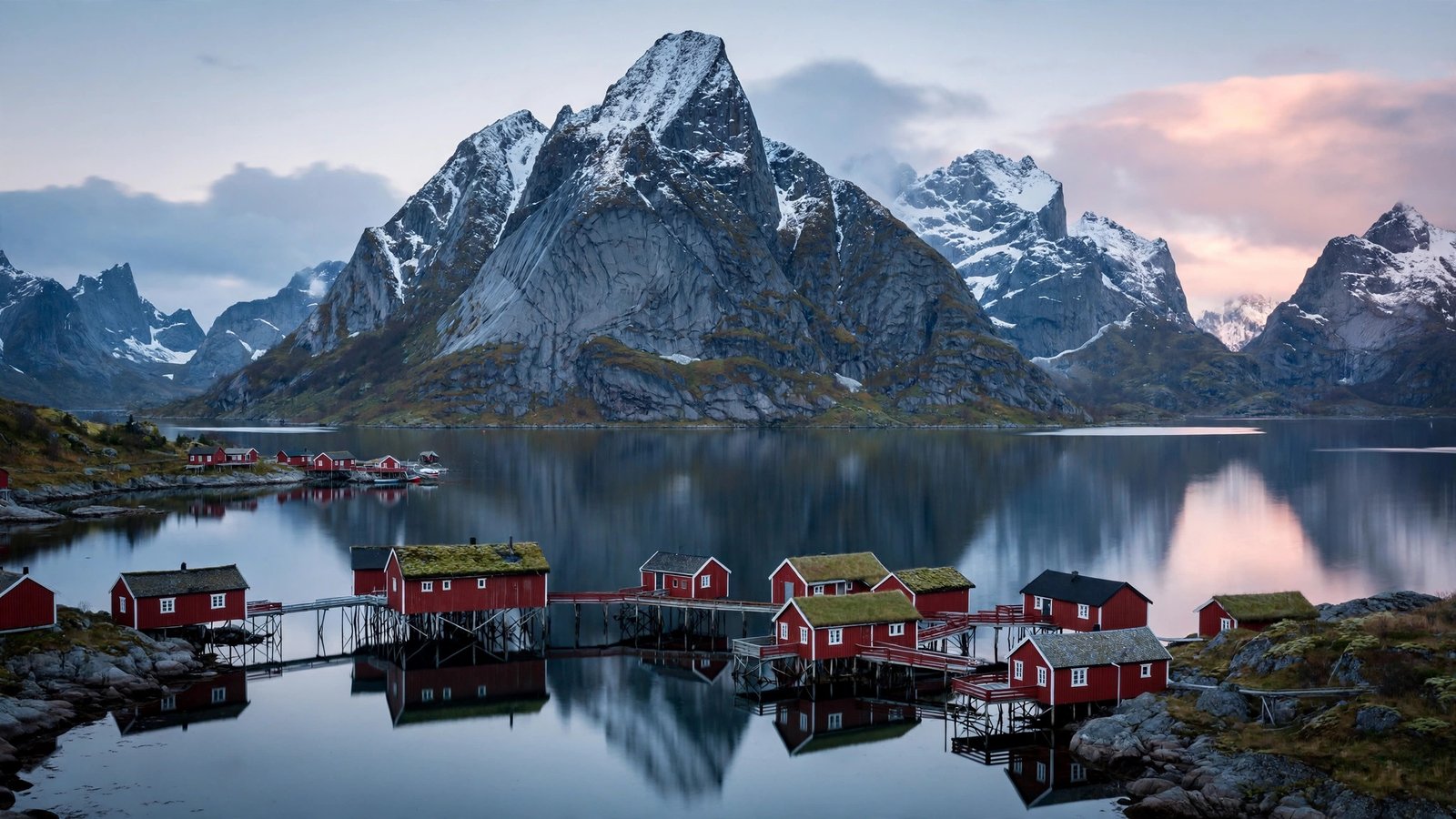
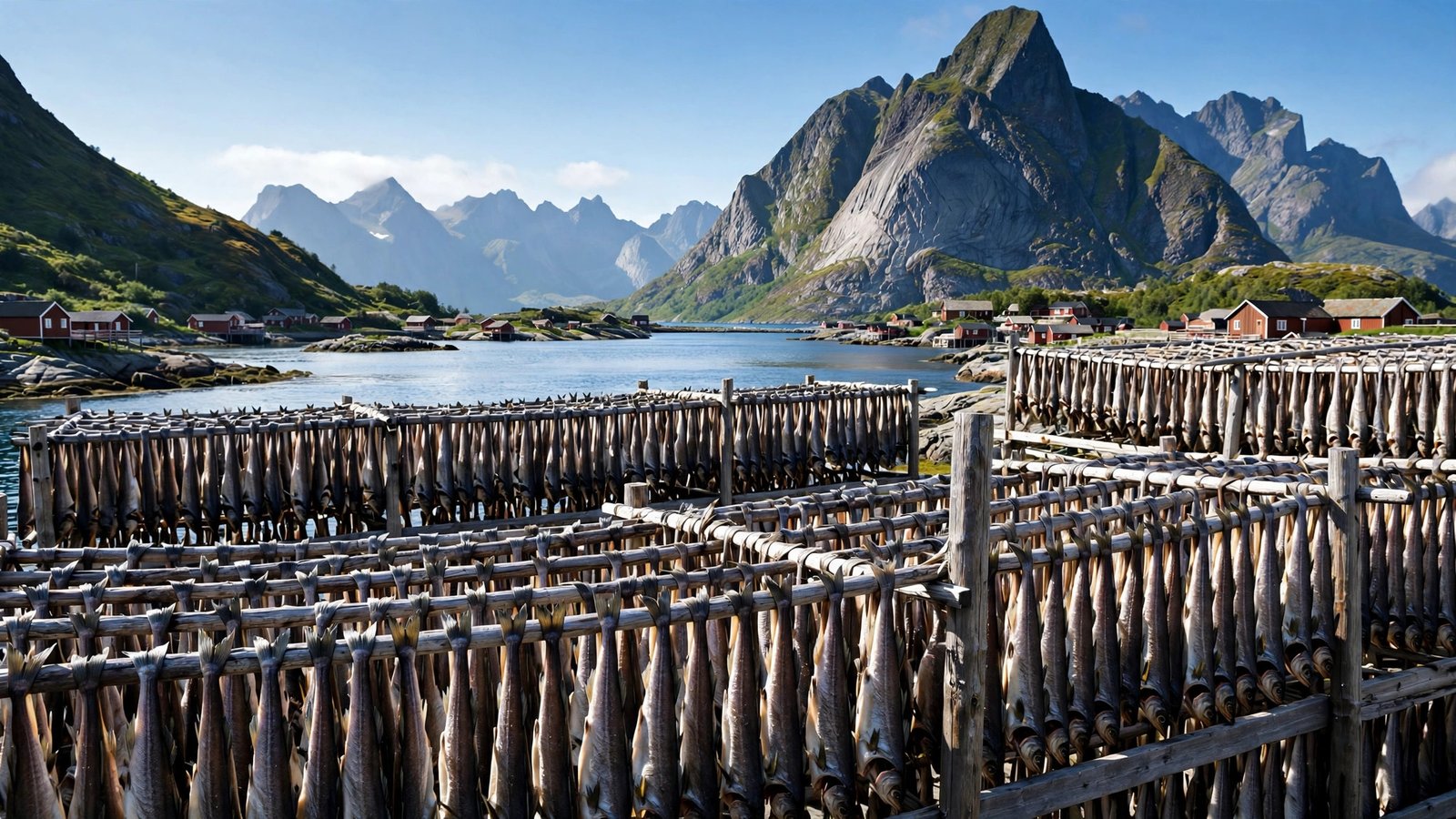
The Lofoten Islands are the Norway of the photographs: granite peaks rising straight out of the Arctic sea, red fishermen’s cabins on stilts over black water, white-sand beaches below snow-striped mountains, and villages where the cod still hang drying on wooden racks as they have for a thousand years. For many travelers they are the single highlight of a Norwegian trip — and the place that most rewards planning, because Lofoten’s weather, distances and seasons are as dramatic as its scenery.
This guide is the complete first-timer’s overview: what the islands are, when to come, how the geography works, and how to shape a first trip. The logistics deep-dives live in our companion guides to how to get to Lofoten Islands and the Lofoten itinerary 5 days; start here, then go there.
Lofoten Archipelago
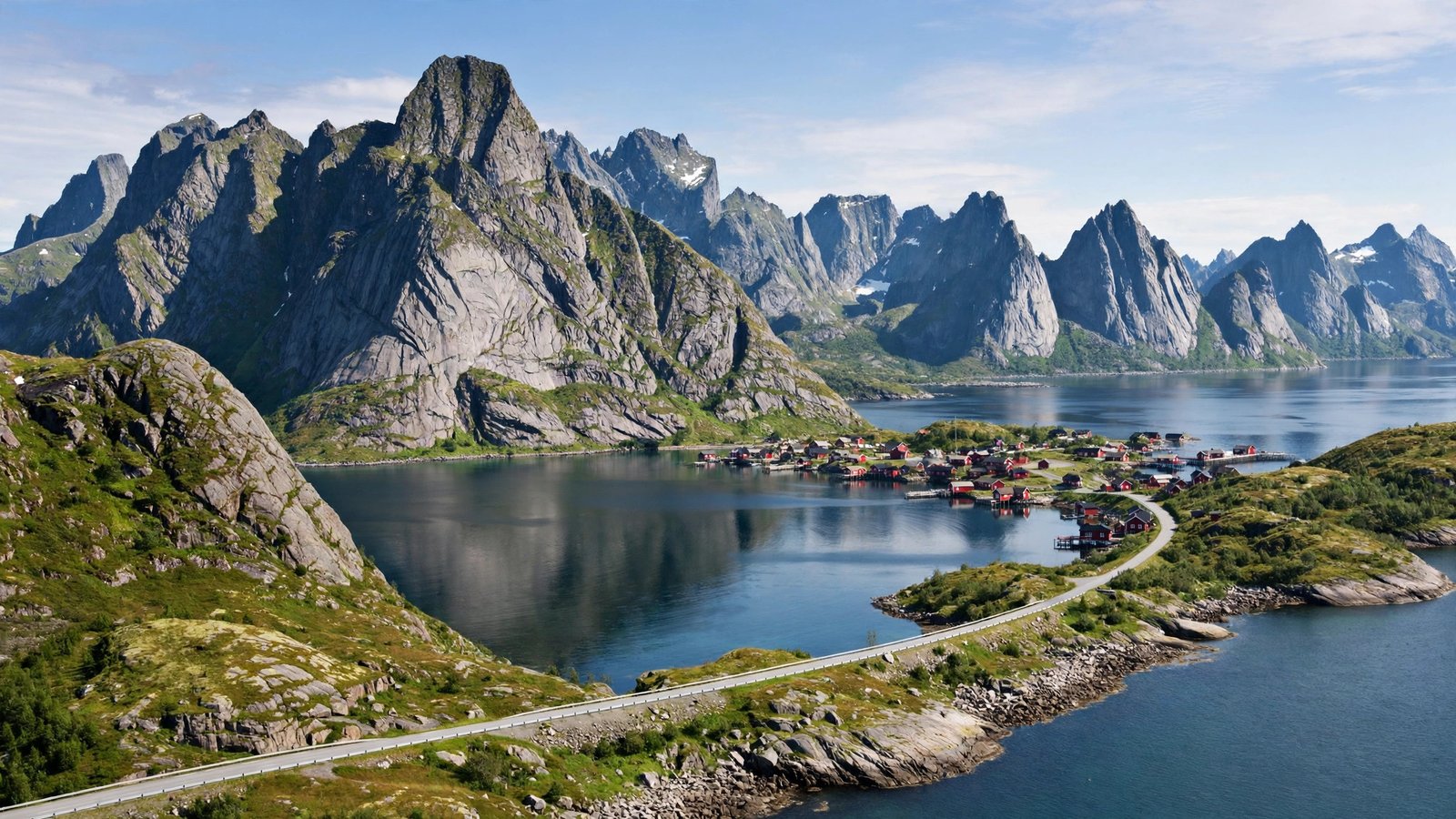
Lofoten is an archipelago of mountainous islands stretching some 100 miles into the Norwegian Sea, well above the Arctic Circle off Norway’s northwestern coast. From the mainland they appear as a jagged wall — sailors call it the Lofoten Wall — and the chain runs southwest from the Raftsund strait to the tiny, remote island of Røst.
Four main islands carry the road network and most of the population of roughly 24,000: Austvågøya in the northeast (Svolvær, the islands’ capital and transport hub), Vestvågøya (Leknes, the administrative center, and the great surf and beach coast), Flakstadøya (Ramberg, Nusfjord) and Moskenesøya in the southwest (Reine, Hamnøy and Å, the village at the very end of the road). Bridges and tunnels on the E10 highway link them all — the drive from Svolvær to Å is about 120 miles of some of the most theatrical road in Europe.
Offshore lie the bird islands of Røst and Værøy, reachable by ferry, famous for puffin colonies; and at the southern tip of Moskenesøya churns the Moskstraumen, one of the world’s strongest tidal maelstroms — the original maelstrom of literature.
Lofoten
What defines Lofoten is the meeting of that geography with a working culture. This is not a scenic reserve emptied of people; it is a fishing archipelago that happens to be beautiful. The winter cod fisheries — built on the skrei, the great migratory cod that arrive from the Barents Sea to spawn between January and April — have sustained these villages for a millennium, and stockfish from Lofoten was medieval Norway’s great export, traded as far as Italy, where it remains a delicacy today.
Layers of history sit lightly on top: the Lofotr Viking Museum at Borg on Vestvågøya, built around the largest Viking longhouse ever excavated; the preserved 19th-century fishing village of Nusfjord, one of Norway’s best-kept; the WWII history of the Lofoten raids. The modern layer is tourism — photographers, hikers and aurora hunters — but the islands’ working harbors, fish racks and boat sheds are not a set. Visitors are guests in a place that was drying cod a thousand years before it had a gift shop, and Lofoten is best experienced with that respect intact.
Lofoten Norway
Within a Norway itinerary, Lofoten sits in the far north, usually paired with one of three companions: Tromsø (about six hours by road, or a short flight via Bodø), the western fjords (a flight apart — there is no quick land route), or Bodø and the Nordland coast (the ferry gateway). Most first-timers give Lofoten three to five nights; fewer than three and the weather gets a vote you cannot override, more than five and you can split bases east and west — the strategy our guide to where to stay in Lofoten recommends.
The Gulf Stream is Lofoten’s secret: for islands at 68°N, winters are strikingly mild (coastal temperatures hover around freezing rather than deep below it), and summers are cool rather than warm — expect the 50s and low 60s°F and pack accordingly, with July the warmest month at roughly 15–18°C on good days.
Lofoten Islands Norway
Lofoten’s year is governed by light. Summer (roughly late May to mid-July) brings the midnight sun: the sun circles without setting, hikes and kayak trips run at midnight, and the islands are at their greenest and busiest. Hiking season proper runs June to September.
Winter brings the polar night in December and early January — a few hours of blue twilight rather than true day — and with it the northern lights season, which runs from late August’s first dark nights to mid-April. Winter is also skrei season, storm season and the photographers’ season, when low Arctic light paints the peaks pink at midday.
Between them sit the shoulder seasons, which regulars quietly favor: September (autumn color, first aurora, open roads) and late spring (returning light, seabirds arriving, quiet villages). There is no bad month in Lofoten — there are only months that match or mismatch your plans, and matching them is the whole game of a first trip.
Lofoten Island Norway
Austvågøya — the gateway island. Svolvær, the capital: airport, coastal-ship port, sea-eagle safaris, the WWII museum and the best restaurant scene. Kabelvåg, the older, quieter neighbor, holds the Lofoten Cathedral and the aquarium. Henningsvær, on small islands off the south coast, is the archipelago’s most fashionable fishing village — galleries, cafés and a football pitch on a rocky islet that the internet made famous.
Vestvågøya — the agricultural heartland and beach coast. Leknes is the practical hub. The west coast holds the famous beaches — Haukland, Uttakleiv, Unstad (with its Arctic surf scene) and Eggum for midnight sun — while Borg holds the Viking museum and Stamsund hosts the coastal ship and a famously characterful theater scene.
Flakstadøya — the scenic middle: Ramberg’s white bay, the village of Nusfjord tucked into its fjord arm, and the road’s most photogenic stretches.
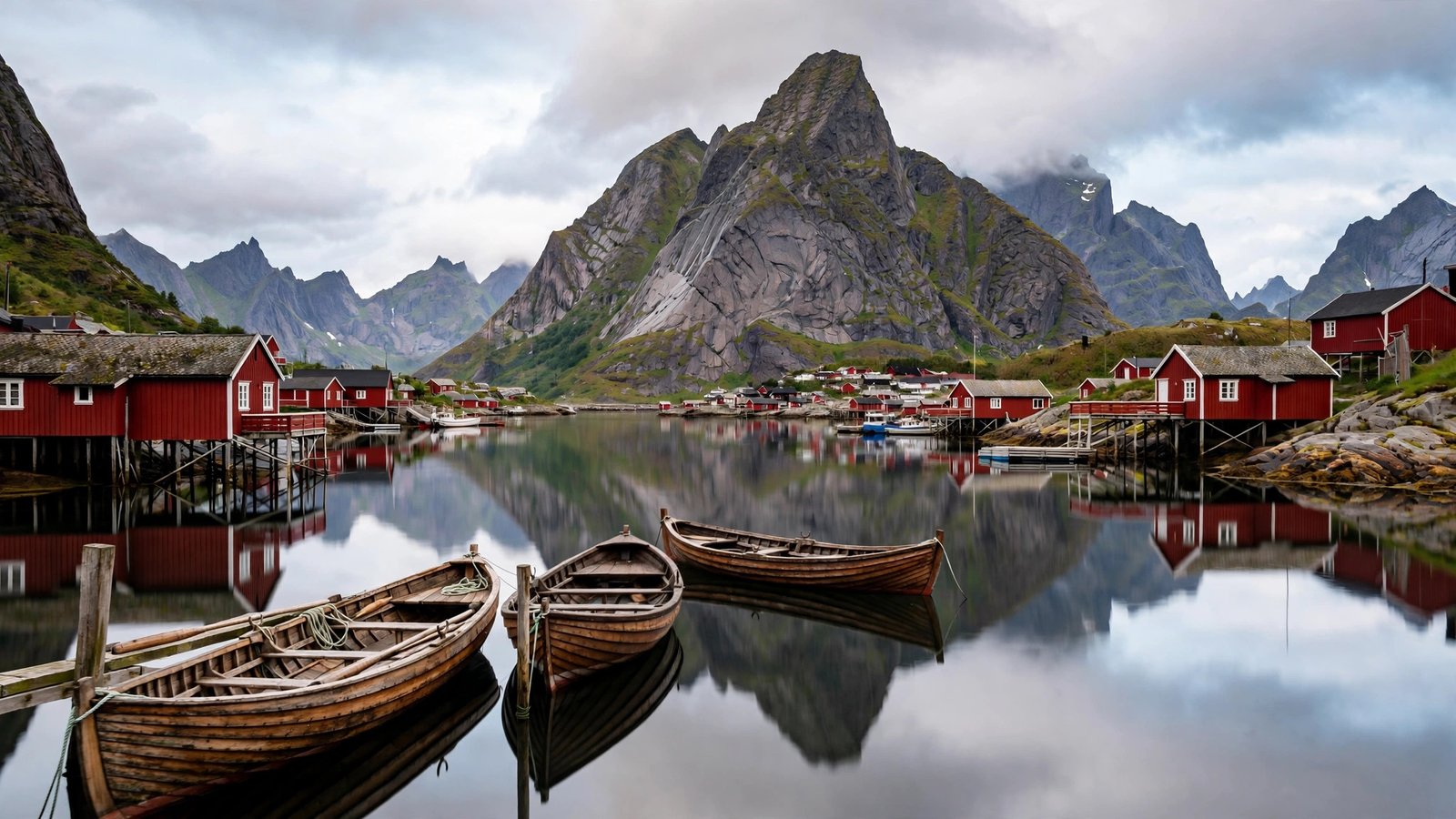
Moskenesøya — the dramatic end of the road: Reine, the fishing village under the Reinebringen ridge, widely considered Lofoten’s most beautiful base; Hamnøy, the red-cabin viewpoint across the water; Sakrisøy and its yellow cabins; Sørvågen and Tind; and Å, where the E10 simply stops at one of Norway’s best-preserved fishing villages, complete with stockfish museum and a beloved bakery in the old storehouse.
Lofoten for First Timers
The mistakes first-timers make are consistent, and all avoidable:
- Too few nights. Two nights is a coin toss against the weather. Four or five turns the trip.
- One base, long drives. The E10 is glorious but slow; splitting nights between the Svolvær side and the Reine side halves the backtracking.
- Summer assumptions in winter (and vice versa). Daylight ranges from 24 hours to nearly none across the year; plan activities for the light you will actually have.
- Booking late. The best rorbu cabins and Reine-side stays go early for June–September and the February cod-and-aurora peak; official resources like Visit Lofoten list accommodation and activities across the islands.
- Skipping the working islands for the viewpoints. Give a morning to Nusfjord, Å or Henningsvær on foot; the villages are the culture, the peaks are the frame.
- Ignoring the forecast’s authority. Check Yr daily, hike to the weather window rather than the calendar, and let one day float — Lofoten always uses it.
Lofoten Adventure Activities
- Sea-eagle safari by RIB from Svolvær — into the Trollfjord’s narrows, with white-tailed eagles diving for fish beside the boat; a year-round signature trip.
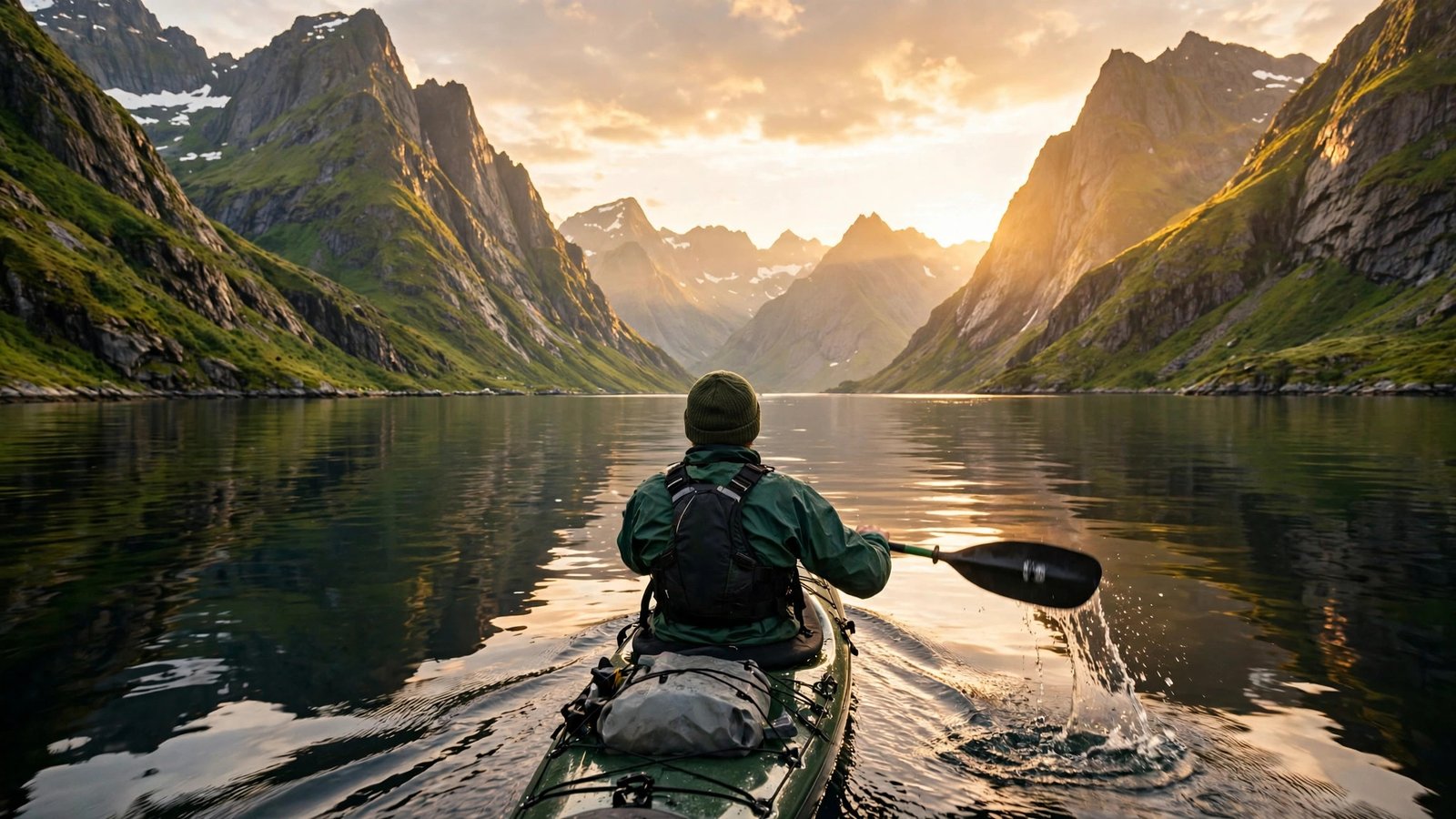
- Kayaking — guided paddles from Reine, Henningsvær and Eggum, including midnight-sun tours in summer; the water is Arctic but the dry suits are real.
- Arctic surfing at Unstad — one of the world’s northernmost surf breaks, with a surf center renting thick wetsuits and boards to the brave and the curious.
- Fishing trips — join a traditional fishing boat from Svolvær or Reine; in skrei season you are fishing the most storied cod stock on Earth, and the catch often becomes dinner.
- Hiking — Reinebringen’s stone staircase, Ryten above Kvalvika beach, Festvågtind over Henningsvær, Fløya over Svolvær; half-day classics with full-value views.
- Horseback riding at Hov on Gimsøy — Viking-bred Icelandic horses on white beaches under the midnight sun or the aurora.
- Photography and aurora tours — guided night trips in winter that handle the driving, the forecasts and the camera settings while you watch the sky.
Eating in Lofoten: Stockfish and Beyond
You cannot understand Lofoten without eating its fish, and happily the islands make that easy at every budget. The signature dish is stockfish — cod dried unsalted on the great wooden racks (hjell) you will see in every village, then rehydrated and cooked into everything from the creamy bacalao stewed with tomato and olive oil (a legacy of the Italian trade) to grilled stockfish steaks served in the better restaurants in Svolvær and Henningsvær. In skrei season (roughly February to April), restaurants serve the fresh migratory cod in the traditional preparation — poached with its liver and roe, the dish locals call mølje.
Beyond cod: the islands offer lamb from sheep that graze on seaweed-rich coastal pasture, brown cheese on waffles in every café worth its salt, cinnamon buns from the famous bakery in Å (the old storehouse bakery in the museum village), and a growing scene of small restaurants working seriously with local catch — sea trout, halibut, king crab pulled further east. Self-caterers should know that groceries concentrate in Svolvær, Leknes and the larger villages, and that the rorbu kitchen is not a compromise: buying fish at the harbor and cooking it as the light changes over the fjord is, for many returning visitors, the meal they plan the whole trip around.
Frequently Asked Questions
How many days do you need in Lofoten? Three nights minimum, four to five ideally. That allows a weather buffer, both ends of the archipelago, and one activity day that is not driving.
What is the best month to visit Lofoten? June for hiking and midnight sun; September for balance and value; February for aurora, snow and skrei. Each is a different archipelago.
Is Lofoten expensive? Norway-expensive, yes — groceries and cabin kitchens are the counterweight. Cabin stays with cooking facilities are the standard budget strategy.
Do I need a car in Lofoten? It is strongly recommended. Buses exist but are infrequent; the islands’ magic is in the stops between villages, which only a car (or a bicycle in summer) reaches well.
The Bottom Line
The Lofoten Islands reward the traveler who slows down: pick the season that matches your dream — midnight sun or aurora — give the archipelago at least four nights, split your bases, and spend as much time in the working villages as at the famous viewpoints. Do that, and Lofoten stops being a scenic detour on a Norway trip and becomes the entire reason for it — as it has been for generations of fishermen, traders, painters and photographers before you.
