
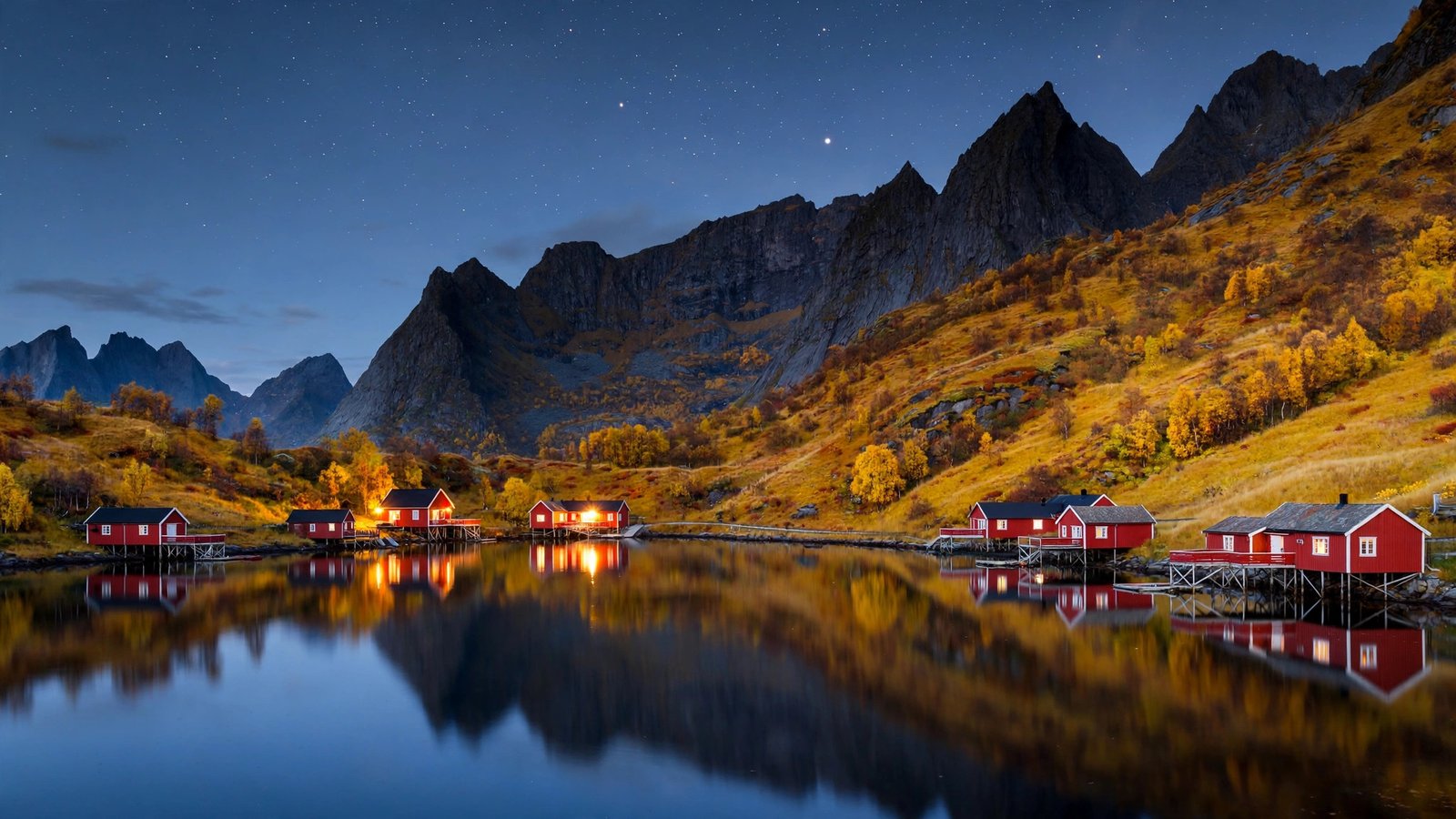
The best time to visit Lofoten is not a date — it is a decision about light. These islands at 68°N swing between 24-hour daylight and near-total darkness, between cod season and surf season, and each configuration of the archipelago is effectively a different destination. The hiker’s Lofoten of July, the aurora hunter’s Lofoten of February and the photographer’s Lofoten of September share a map and almost nothing else.
This month-by-month guide makes the trade-offs explicit, so you can pick the version of Lofoten you actually want. It goes deeper than our country-level best time to visit Norway guide, which is the right companion if you are combining the islands with the fjords.
Best Time to Visit Lofoten: The Short Answer by Traveler Type
- Hikers and road-trippers: mid-June to early September — trails open, days endless, everything running.
- Northern lights hunters: late September to late March, with February the connoisseur’s pick (long nights, snow cover, skrei season) and late September the comfortable pick (aurora plus autumn roads and no deep cold).
- Photographers: September and February–March — low Arctic light, dramatic weather, and in winter the pink midday glow on snow-covered peaks.
- Budget travelers: May and October — shoulder prices, quiet villages, and respectively returning light or returning darkness as the bonus.
- Fishing culture and food travelers: February to April, the skrei season, when the working islands are at their most alive.
Lofoten Weather
Lofoten’s weather is maritime Arctic: milder than the latitude threatens, wetter and windier than the brochures admit. The Gulf Stream keeps the coast near or just below freezing through most of winter — Svolvær’s January days typically hover around 0°C (32°F) — while summer highs run 15–18°C (59–64°F) in the warmest weeks of July, with cooler, fresher spells always possible. October is statistically the wettest month; late spring is the driest stretch.
The operative word is changeable: Lofoten weather is a sequence of Atlantic fronts, and a single day can deliver rain, hail, sun and a rainbow in rotation. The islands’ compact geography helps the traveler — one side of a ridge can be stormy while the other is calm — and the Norwegian forecast service, Yr, is accurate enough at 24–48 hours that locals plan their weeks by it. Build one flexible day into every Lofoten itinerary and the weather stops being an opponent and becomes part of the show.
Two wind notes matter. Winter storms can be serious — ferries cancel, the E10 gets difficult in blowing snow — and summer’s enemy is not wind but its opposite: low cloud and sea mist that can sit on the peaks for a day. Both argue for the same strategy: more nights, looser plans.
Summer: June, July and August
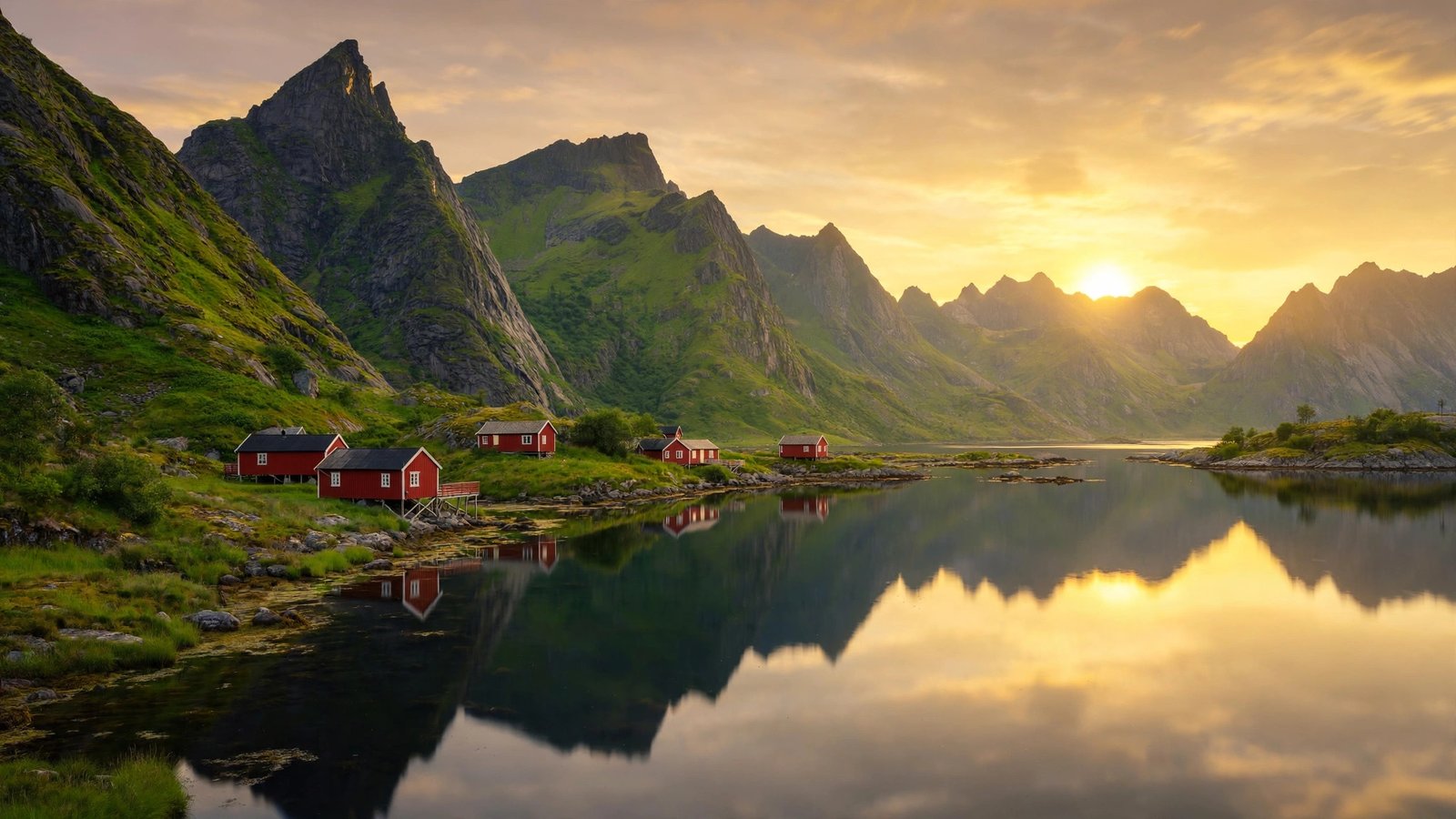
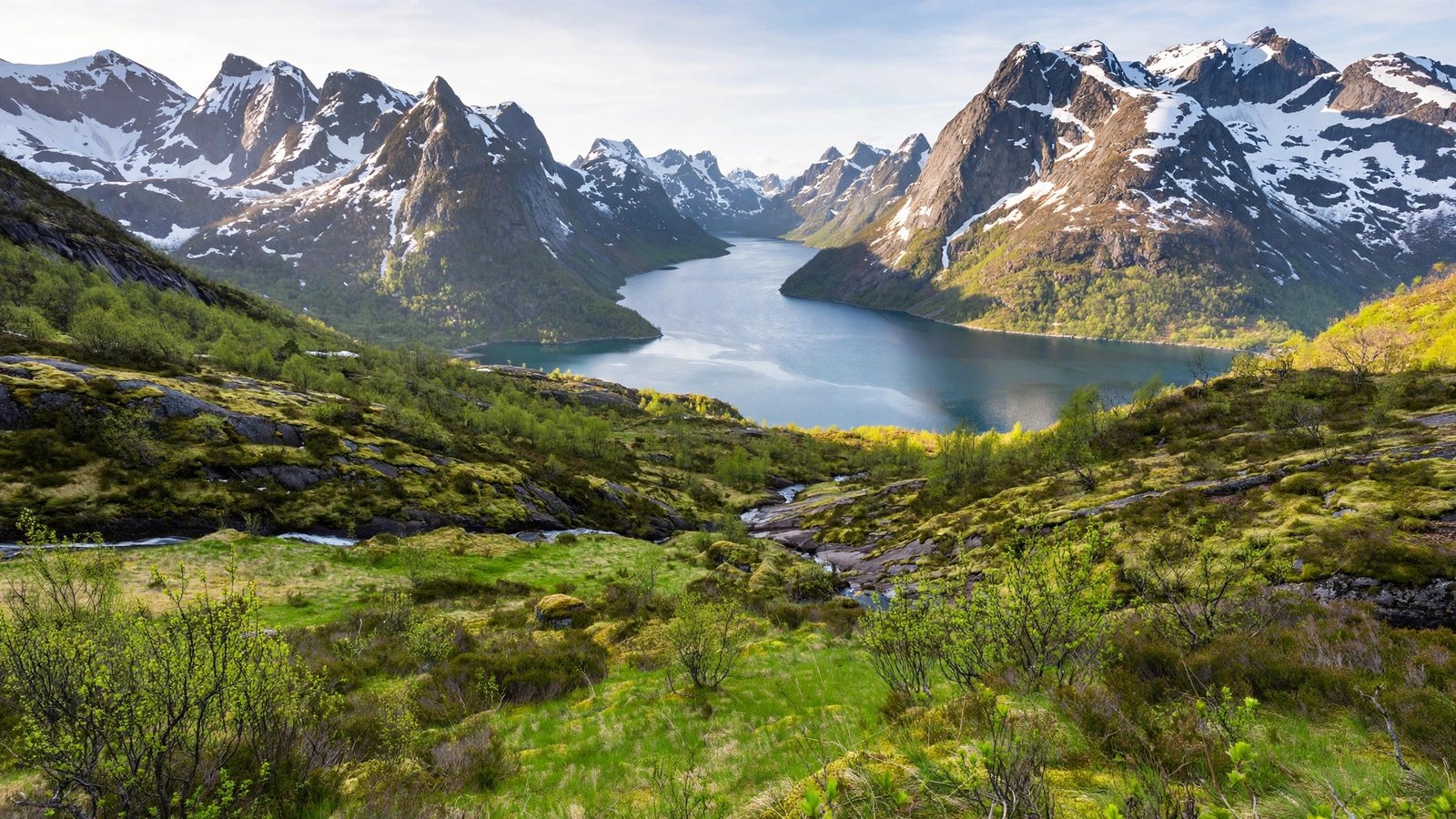
Summer is Lofoten’s famous season, and its centerpiece is light: from roughly May 28 to July 14 the sun does not set at all, and for weeks on either side the nights are merely bright twilight. The islands turn green, the sea eagles are feeding young, the beaches — Haukland, Uttakleiv, Unstad, Ramberg — show their improbable Caribbean colors (in Arctic water), and every hiking trail is open.
June is the sweet spot of the season: full midnight sun by mid-month, the villages awake but not yet full, and prices a step below July. July is the peak — warmest temperatures, every service running, Norwegians on holiday, and the best-known rorbu cabins long booked; it is the month to reserve first and plan early. August keeps most of the summer machinery, begins to thin out late in the month, and rewards hikers with berries on the trails and, by its final week, the first properly dark nights — the earliest possible aurora tease around the end of August.
Summer’s costs are literal and figurative: this is the expensive window, the E10 is at its busiest (still quiet by most countries’ standards), and the famous viewpoints have company. None of that changes the verdict: for a first trip built around hiking and the midnight sun, summer is the answer.
Lofoten in September
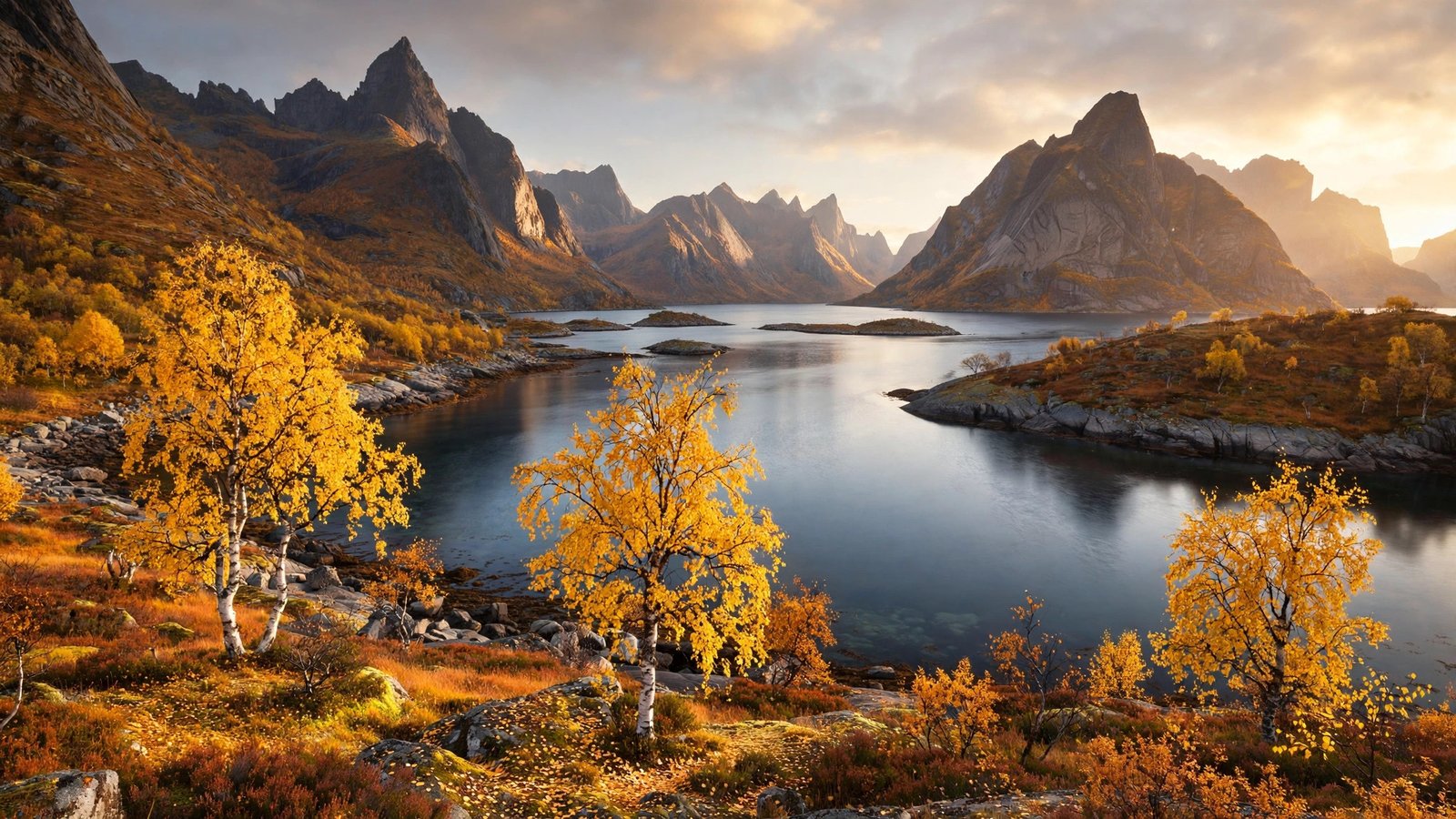
September is the month Lofoten regulars argue is the islands’ best, and the case is strong. The month opens with summer’s infrastructure still running — trails open, boats sailing, restaurants open — but the crowds have gone home and prices have stepped down. Across the month the landscape turns: birch and mountain slopes go gold and rust, the light drops low and photographic, and the sea stays (relatively) at its warmest.
Crucially, September is when the two seasons overlap: the nights become properly dark again, and the northern lights return — often around the autumn equinox, which is statistically one of the most active aurora periods of the year — while the days remain long and mild enough for hiking and kayaking. You can plausibly hike Reinebringen in afternoon light and watch the aurora over the same fjord after dinner. No other month offers both of Lofoten’s headline acts in one day.
The risks are weather (the autumn storm season begins, especially late in the month) and progressive closures as October approaches. Front-load the must-dos early in a September trip, and you are playing the odds correctly.
Lofoten in October and November
October and November are Lofoten’s moodiest, cheapest and least-visited months — and the ones that divide travelers most sharply.
October continues the aurora season in earnest, with long dark nights, autumn storms rolling through and fishing villages returning to their working selves. It is statistically the wettest month of the year; it is also when storm-watching from a rorbu — dramatic seas, fast light, empty viewpoints — becomes a legitimate reason to come, at the lowest prices of the aurora season.
November is the deep shoulder: the light is failing toward the polar night, many tourist services pause, and the islands belong to fishermen, weather and the committed. Aurora conditions are excellent when the sky clears. Travelers who love November in Lofoten tend to be photographers and repeat visitors; first-timers with one shot at the islands should treat it as a specialist choice, not a default.
For both months, the rules are: self-catering accommodation (restaurant choice narrows), a car (you need the flexibility), flexible days (the storms set the schedule) and realistic expectations — and in exchange, an Arctic authenticity the summer islands keep backstage.
Winter: December to March
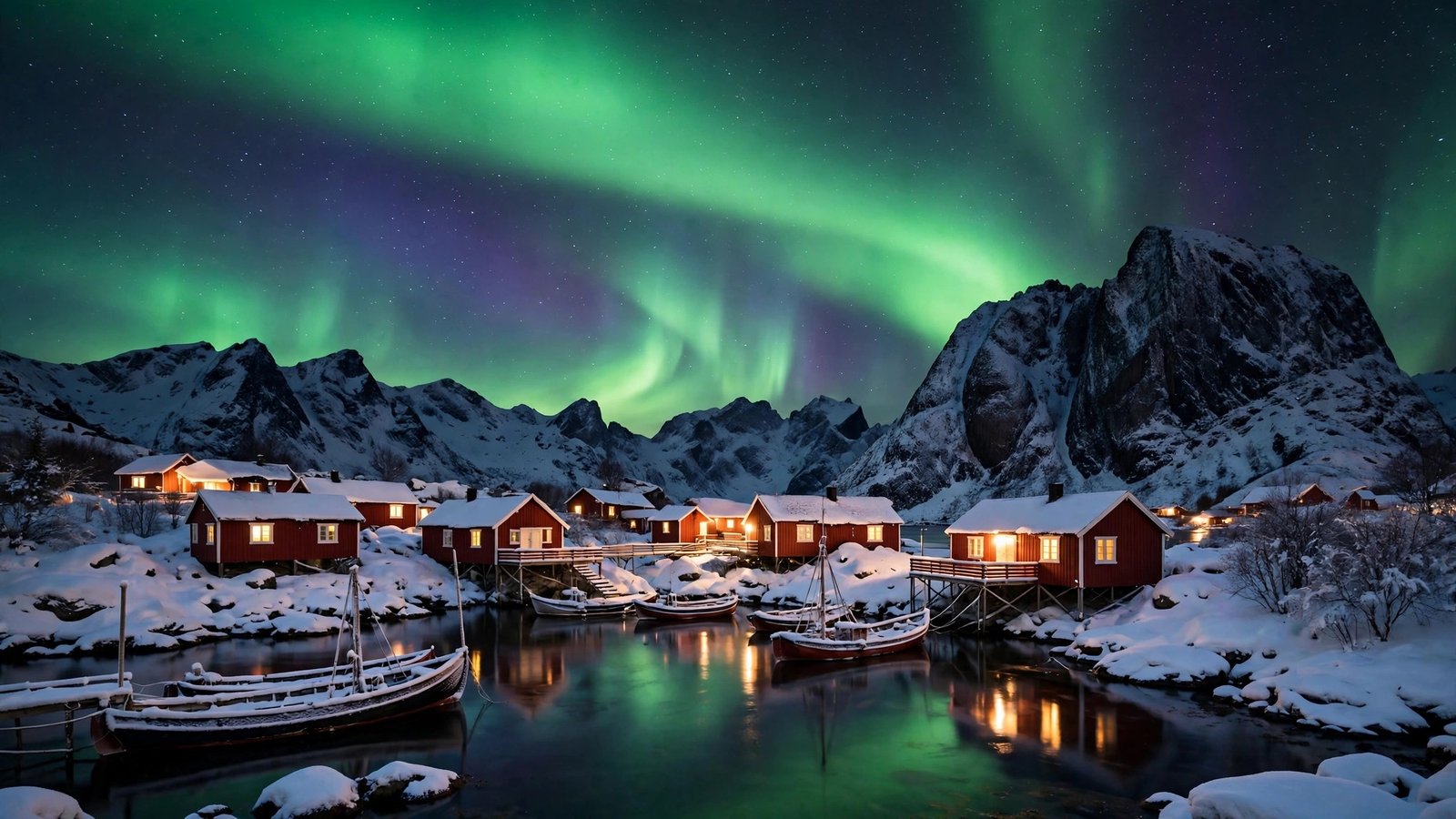
Winter is Lofoten’s second great season. December brings the polar night — the sun stays below the horizon from roughly December 7 to January 5, replaced by hours of blue and pink twilight that photographers cross the world for — and the full aurora season. January deepens the darkness, then February changes everything: the light returns visibly week by week, the skrei cod fleet is at full work, the World Cod Fishing Championship approaches in Svolvær (held in March), and snow-covered peaks over dark fjords give winter its postcard. March pairs long aurora nights with real daylight for skiing, snowshoeing and sea-eagle safaris — for many, the finest winter month of all.
Winter prices run high in the aurora market (less so than July, more than the shoulders), tours book out around holidays, and the weather demands the buffer days this guide keeps prescribing. Our dedicated guides take the winter story deeper: the aurora season itself in northern lights in Lofoten and the dark weeks in polar night in Lofoten.
Lofoten in April and May
The spring shoulder is Lofoten’s quiet value window, and April and May are two different trips.
April is winter’s long tail: the aurora season ends around mid-April as nights brighten, ski touring is at its best in the high snowpack, the skrei season closes, and Easter week fills the islands with Norwegian holidaymakers before a quiet late month. May is the transformation — snow retreating to the peaks, waterfalls high with meltwater, seabirds returning to the cliffs, services reopening — and by its final week, the midnight sun arrives and summer has effectively begun, at May prices and May crowd levels.
Spring’s compromises: higher trails may still be snowbound early in the window, some seasonal businesses open only in late May, and the weather is at its most indecisive. Its gifts: space, softness and price. For photographers who want the islands to themselves in gentle light, late May is one of the year’s great secrets.
Lofoten Summer vs Winter
If you are torn between the two headline seasons, here is the honest head-to-head. Summer gives you hiking, beaches, kayaking, midnight-sun energy and full services — at the year’s highest prices and busiest viewpoints, with zero chance of aurora. Winter gives you the northern lights, snow architecture, skrei culture and Arctic atmosphere — with hiking mostly off the table, daylight rationed, and weather that must be planned around. The tiebreakers: choose by the experience you would regret missing. Aurora is winter-only and never guaranteed; the midnight sun is summer-only and always delivered. Travelers who can only come once and want the most complete Lofoten usually pick the September overlap — it is the one month that hedges both bets.
Frequently Asked Questions
What is the warmest month in Lofoten? July, averaging in the mid-teens Celsius (upper 50s to mid-60s°F) — with the caveat that “warm” in Lofoten always comes with a jacket in the daypack.
When is Lofoten cheapest? October and November, and again in late April–May. Rorbu and hotel prices can run dramatically below July — compare actual dates and check current prices before booking.
Can I see the northern lights in summer? No — the sky never gets dark enough from roughly May to mid-August. The aurora needs darkness; that is the entire logic of the seasons above.
Which month has the best weather overall? Statistically, late spring into June is the driest, most stable stretch — but Lofoten’s weather is a daily negotiation in every month, and the flexible itinerary beats the lucky month.
How far ahead should I book for the best months? For July and for the February–March aurora peak, book rorbu cabins and the Reine-side stays four to six months out; September and the spring shoulder are kinder, at one to two months. Flights to the island airports and the Bodø–Moskenes car ferry follow the same logic — the best months fill their transport first.
The Bottom Line
Pick your Lofoten by its light: midnight sun and open trails in June–July, the great overlap in September, aurora and working harbors from October to March, and quiet value in April–May. There is no wrong answer — there is only the mismatch between the islands you imagined and the season you booked. Imagine carefully, book accordingly, and give the weather one spare day of respect; Lofoten has been keeping its own schedule for a thousand years, and it is not about to change it for any of us.
