
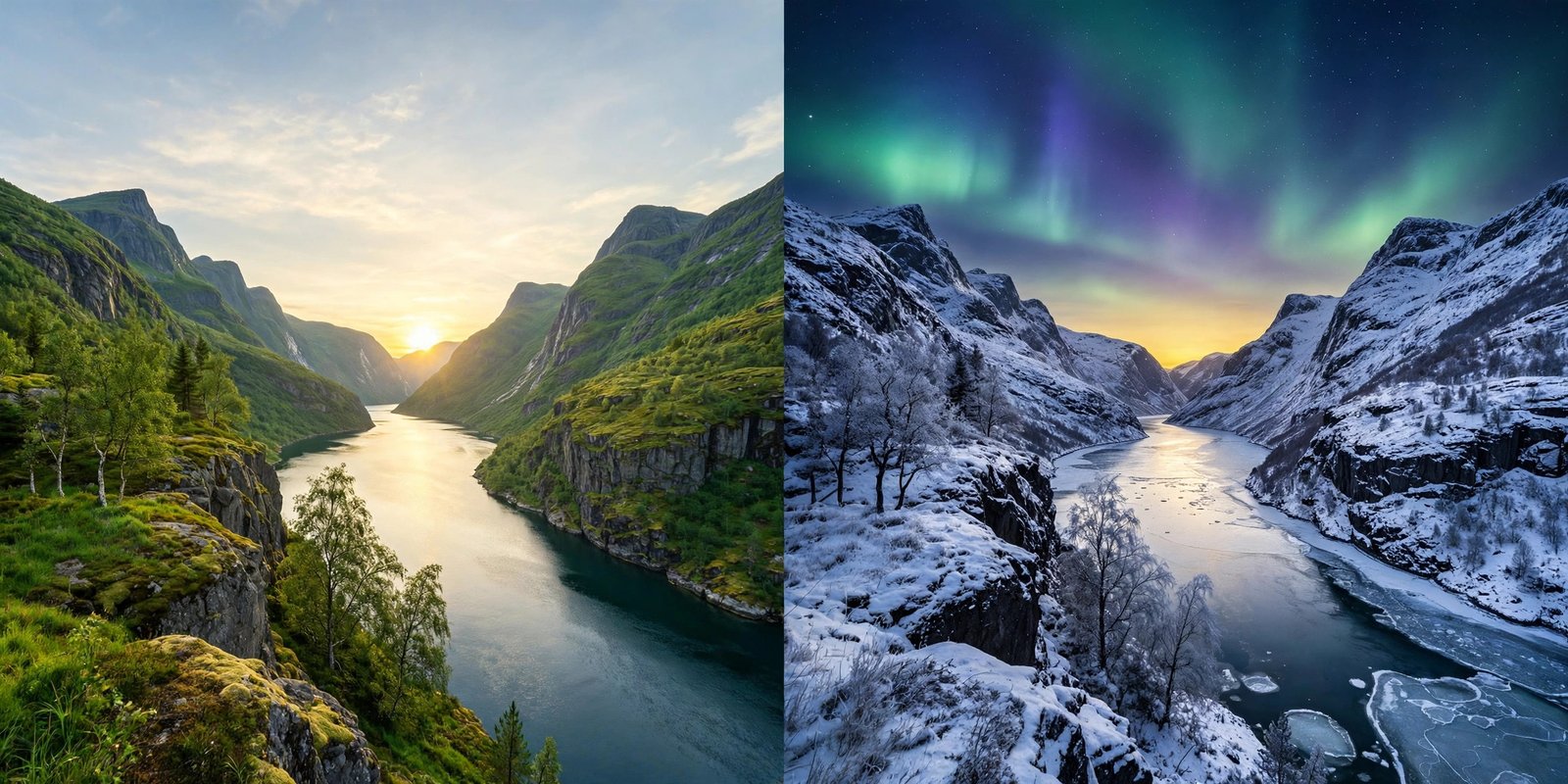
Norway is really two destinations wearing one name: a land of midnight sun, open hiking trails and fjord cruises — and a land of polar night, aurora skies and snow. Choosing the best time to visit Norway is therefore less about “good” and “bad” months than about matching the month to the Norway you came for.
This month-by-month guide lays out what each season actually delivers — light, weather, crowds and what is open — for the fjords, the cities and the Arctic north. Use it alongside our guide to the best places to visit in Norway to fix the “where,” then let this page fix the “when.”
Best Time to Travel to Norway
Short on time? Here is the honest summary most travelers end up following:
- For fjords, hiking and scenic drives: late May to mid-September. Trails open progressively, the famous mountain roads (Trollstigen, Geiranger routes) run in the summer window, fjord cruises operate at full schedule, and the north has the midnight sun from roughly late May to mid-July.
- For northern lights: late September to late March, with the longest, darkest nights from November to January and often the clearest, most active skies around the equinox months (September–October and March).
- For value and quiet: April–May and September–October, the shoulder seasons — waterfalls at full power in spring, autumn color and first aurora in fall, with fewer visitors and lower prices than July.
- For winter sports and Arctic atmosphere: December to March, when Tromsø and the ski resorts are at their best and the coast runs its storm-watching season.
Everything below is the detail behind those four lines.
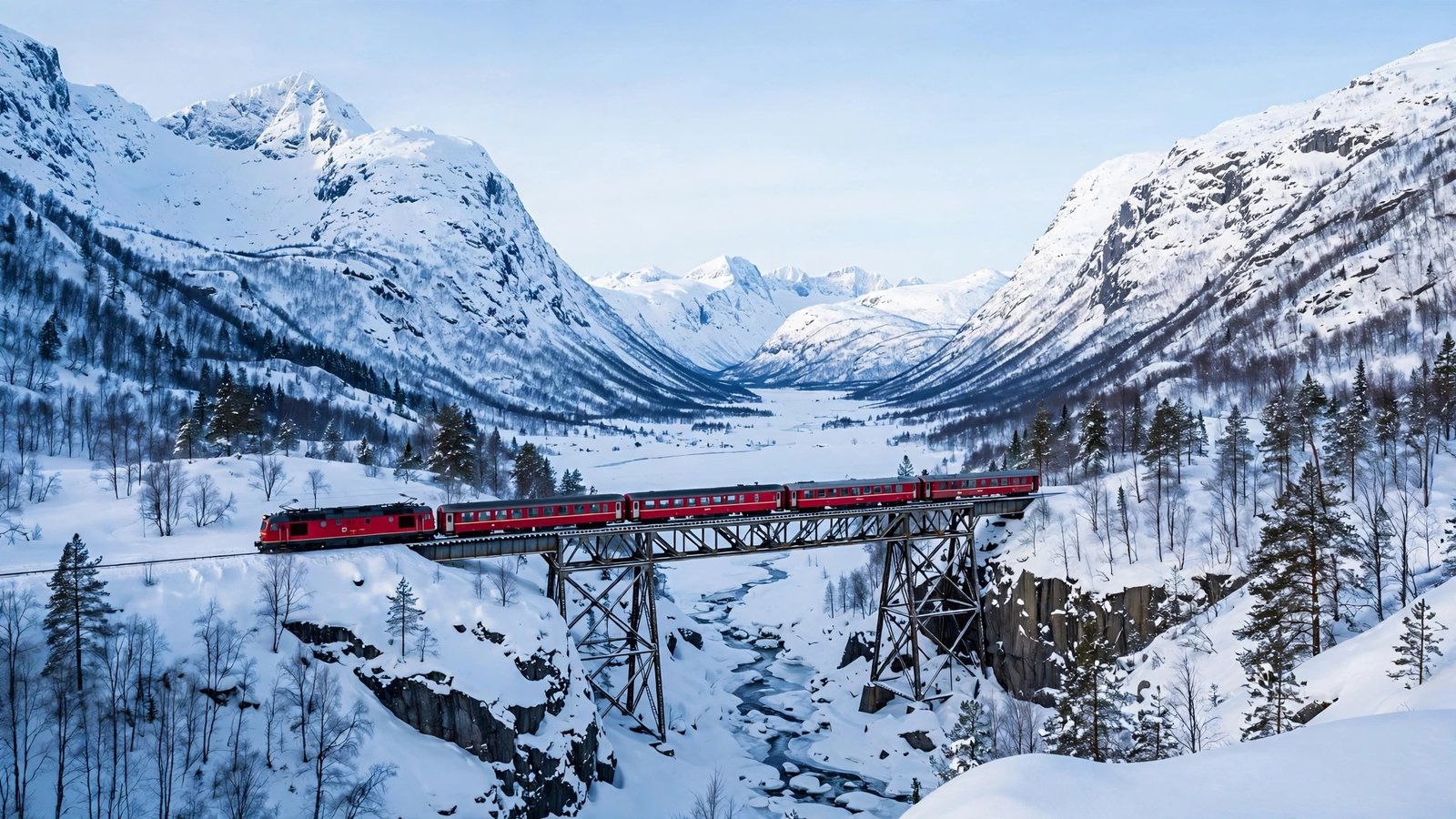
Norway in Winter
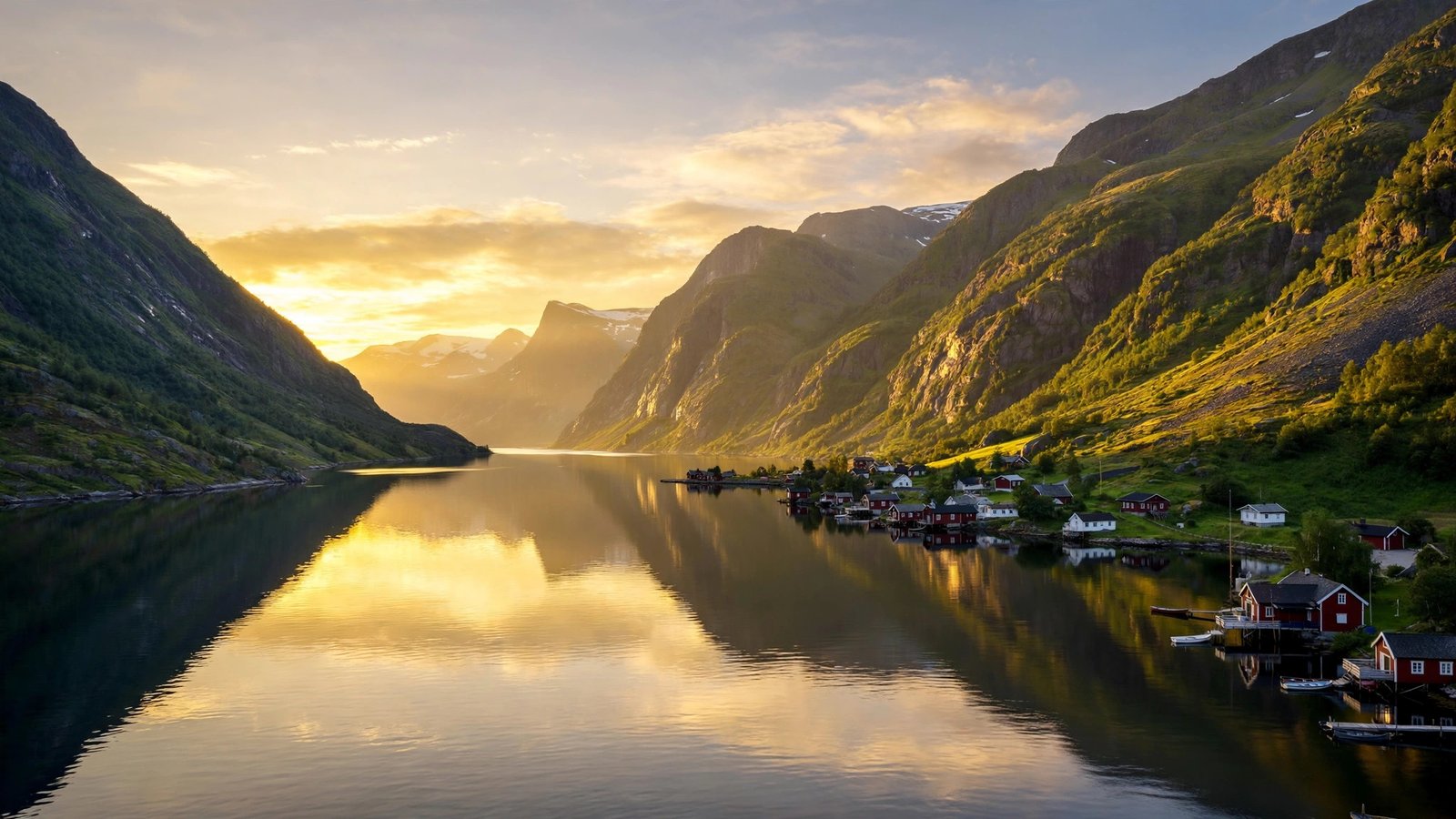
Norwegian winter splits into two very different trips. In the south and the fjord region, November to February is the quiet, dark, wet season: short days, rain as often as snow at sea level, many fjord cruises and mountain roads out of service. It suits city breaks (Oslo and Bergen are handsome in the dark, with Christmas markets in December) and skiers heading inland to resorts like Geilo, Hemsedal and Trysil — but it is the weakest window for classic fjord sightseeing.
In the north, winter is a headline season rather than an off-season. Tromsø, Alta, Senja and Lofoten run their aurora economies at full tilt: dog sledding, snowmobiling, Sami reindeer experiences, whale watching in early winter (the herring season draws orcas and humpbacks, typically November to January), and coastal ships sailing under dark skies. Lofoten in winter adds storm drama and the start of the great cod fisheries. Temperatures on the coast are milder than the latitude suggests — Tromsø commonly hovers not far below freezing — while inland Finnmark delivers the deep Arctic cold the brochures promise.
Pack for winter as a system: wool base layers, insulated waterproof outer layers, real winter boots, and — if you book aurora tours — the patience for cloudy nights. Book two or more aurora nights everywhere; the sky owes nobody a schedule.
Winter in Norway
December brings the year’s shortest days — in Tromsø the sun does not rise at all during the polar night period — plus Christmas markets, festive city weekends and prime aurora darkness. It is a genuinely magical window and priced like one around the holidays.
January is the connoisseur’s aurora month in the north: deepest darkness, cold stable air masses inland, whale season tailing off, and post-holiday prices easing from late in the month. In the fjords it is the quietest month of the year.
February starts the turn: light returns fast (Tromsø gains hours of daylight across the month), ski season peaks with Norwegian winter holidays, and the Lofoten cod fisheries hit full stride. For a winter trip that mixes aurora with actual daylight for activities, February is arguably the sweet spot.
Norway Summer
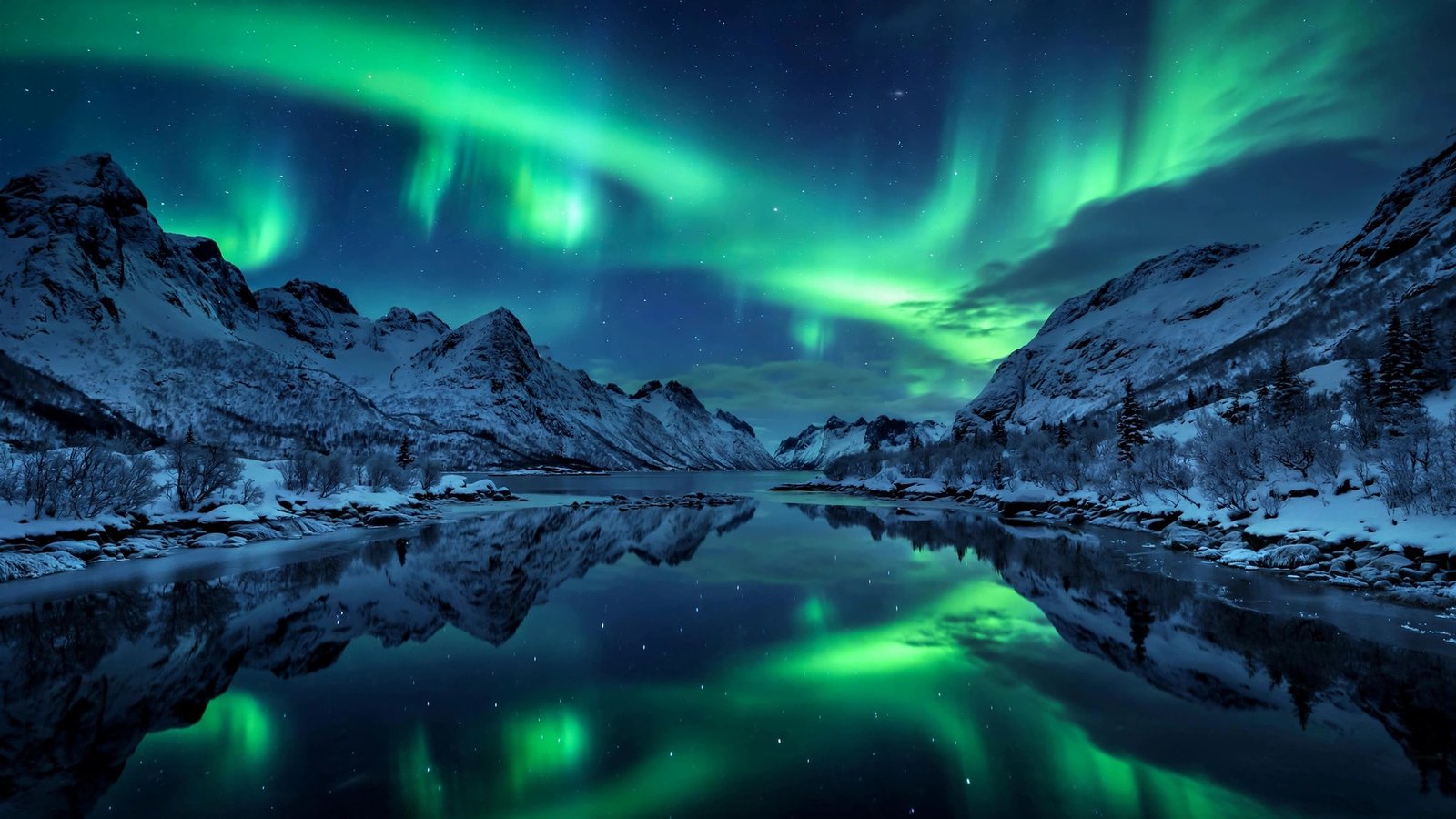
Summer — June, July and August — is Norway’s main season and earns it. The fjords run every cruise, ferry and viewpoint road; the hiking network is fully open; scenic routes like Trollstigen and the Atlantic Road are at their best; and north of the Arctic Circle the midnight sun keeps the sky bright around the clock (roughly late May to mid-July in Lofoten and Tromsø, longer further north). Long evenings extend every day of sightseeing in the south too.
June is the insider’s pick: nearly the longest days, waterfalls still roaring with snowmelt, and crowds a notch below July. July is peak everything — warmest weather (fjord Norway often sees comfortable 65–75°F days), fullest schedules, highest prices, and Norwegians themselves on holiday, which makes towns lively and rural services occasionally closed for fellesferien, the common holiday. August keeps the summer machinery running with slightly thinning crowds; late August brings the first dark-enough nights for early aurora in the far north and the start of mushroom-and-berry season in the forests.
Summer caveats are logistical rather than meteorological: book fjords, Flåm and Lofoten accommodation well ahead, expect cruise-ship surges at Geiranger and Flåm on port days, and carry a waterproof layer regardless of the forecast — western Norway’s weather is a participant, not a backdrop.
Summer is also festival season, and anchoring a trip to one event is a legitimate strategy: Bergenfest in June, Moldejazz in July, the St. Olav Festival in Trondheim at the end of July, the indigenous Riddu Riđđu festival in Kåfjord in July, and Oslo’s Øya Festival in August all land in the long evenings. Midsummer itself (the weekend nearest June 21–24) is celebrated with bonfires on fjords and beaches across the country — Slinningsbålet in Ålesund is the famous giant of the genre — and it is one of the most genuinely Norwegian weekends a visitor can join.
Norway Winter vs Summer: Shoulder Seasons and Spring
The shoulders are where Norway rewards the flexible. Spring (April–May) is waterfall season supreme — snowmelt sends the fjord falls to their most powerful, days lengthen dramatically, and the fjord region is still quiet before the June crowds. Late May is a genuine sweet spot: most summer infrastructure waking up, prices not yet at peak. In the north, spring means skiing in daylight, sea eagles on the coast and the return of the sun’s warmth.
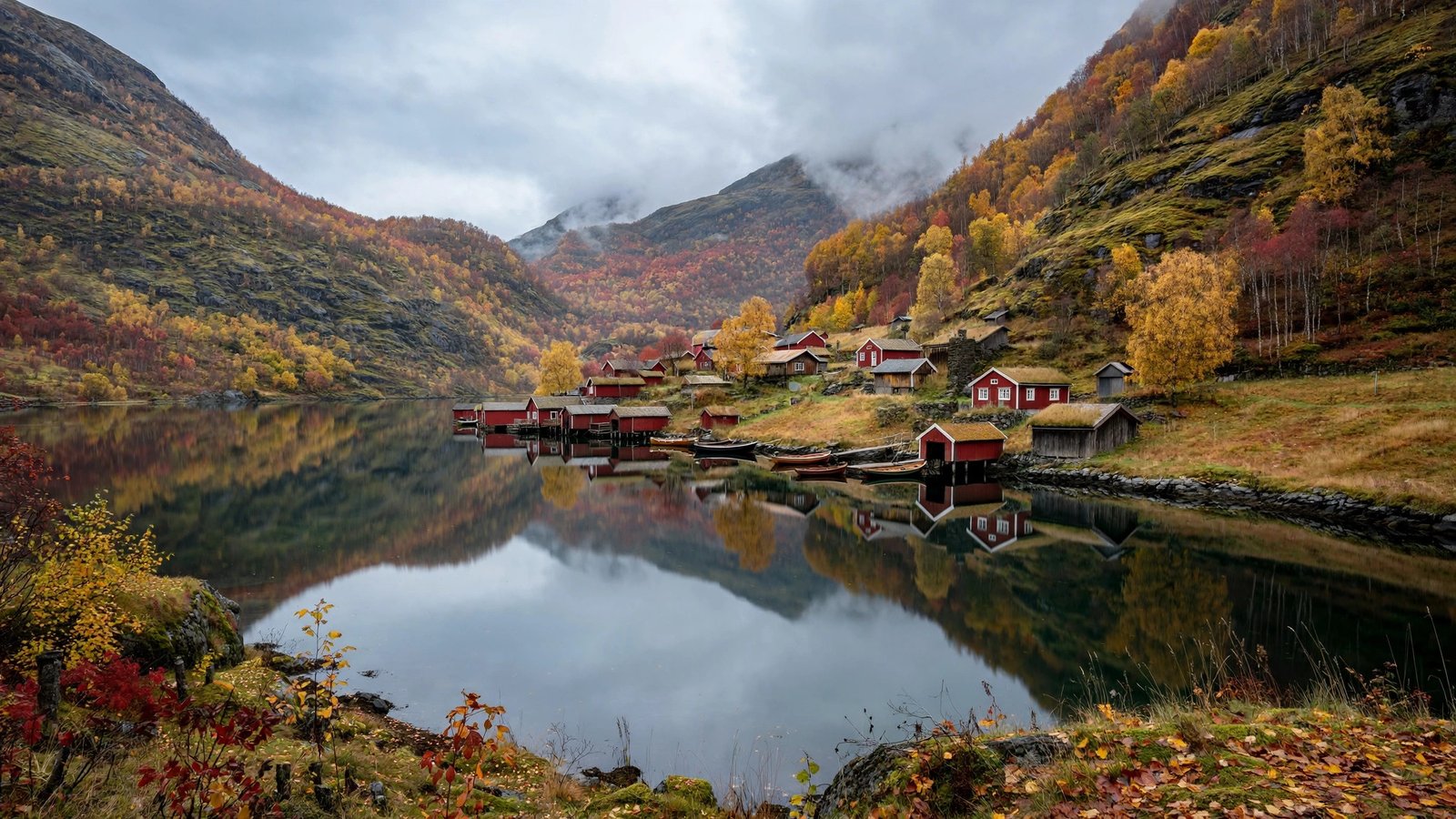
Autumn (September–October) mirrors it: September pairs open summer roads (early in the month) and hiking with autumn color and the season’s first aurora — many photographers rate September in Lofoten the single best month of the year, a case we examine in our best time to visit Lofoten guide. October deepens the aurora season and empties the fjords; by November the country is tipping into winter mode.
Norway Winter
A few practical truths govern any Norwegian winter trip, whichever month you choose. First, daylight is a budget, not a backdrop: in December, Oslo manages roughly six hours of it and Tromsø none at all, so itineraries should front-load outdoor plans into the bright (or least dark) hours and save museums, cafés and saunas for the long evenings — which Norwegians, masters of kos (coziness), treat as a feature rather than a flaw.
Second, winter travel runs on weather’s terms. Roads close in storms, coastal flights and ferries cancel, and the correct response is a spare day in the plan rather than a tighter connection. Third, book the north’s headline experiences — aurora safaris, dog sledding, ice hotels (the Sorrisniva and Kirkenes snow hotels are the famous names) — before you book flights around them; in peak weeks they sell out first and set the shape of the trip.
Finally, do not let winter put you off the fjords entirely: a February or March fjord trip in crisp, low light, on near-empty roads, with snow on the summits and waterfalls beginning to stir, is a connoisseur’s version of Norway that summer visitors never see — provided you drive for the conditions and keep the plan flexible.
What to Book When: A Planning Calendar
- 6+ months ahead for June–August: Lofoten rorbu cabins, fjord-side hotels, the Flåm Railway and popular fjord cruises in peak weeks.
- 3–4 months ahead for December–February in the north: aurora tours, dog sledding and Tromsø hotels around the holidays and February.
- Anytime for shoulder seasons: spring and autumn forgive late planners, but the best-located properties still go first.
- Always: check the seasonal opening of mountain roads and high trails against your exact dates, and align big hikes with the local season — Trolltunga and its peers have defined guided seasons outside high summer for a reason.
For current opening dates, ferry timetables and weather before any trip, the official sources are the Norwegian Meteorological Institute’s Yr weather service and Visit Norway’s seasonal pages; conditions, not calendar pages like this one, get the final vote. Travelers combining seasons can also watch how the north’s two great light shows interlock in our northern lights in Lofoten guide.
Frequently Asked Questions
What is the warmest month in Norway? July, on average — fjord and southern Norway commonly see highs in the upper 60s to mid-70s°F, with hotter spells possible inland. “Warm” remains relative: pack layers in every month.
When is Norway cheapest? The deep winter weeks outside the aurora north (January in the fjords and cities) and the late-autumn shoulder. Summer in the fjords and December–February in Tromsø and Lofoten are the premium windows.
Can I see the northern lights and the fjords in one trip? Yes — in September or March, when the north has real darkness and the fjords still (September) or already (March) run reasonable services. It is the classic two-season compromise.
When does it rain least in Bergen? Bergen is famously wet year-round, with late spring statistically its driest stretch. Go for the city, dress for the weather, and treat a sunny Bergen day as the bonus it is.
What is the best month for Lofoten specifically? September, for the combination of open roads, hiking, autumn color, shoulder prices and the returning aurora — with February the winter counterpick, when the cod fisheries, snow and long aurora nights overlap. June and July win for pure daylight and hiking volume.
Is Norway worth visiting at Christmas and New Year? Yes, as a city-and-north trip rather than a fjord trip: Bergen and Oslo dress up beautifully, Røros runs one of Norway’s most atmospheric Christmas markets, and the aurora north is in deepest darkness. Expect holiday pricing, full hotels in Tromsø, and many rural services closed on the main holidays themselves — book early and plan around December 24–26 particularly.
The Bottom Line
The best time to visit Norway is the season that matches your list: summer for the fjords, trails and midnight sun; winter for aurora, snow and the Arctic north; the shoulders for waterfalls, color, quiet and value. Decide the experience first and the month chooses itself — then book the scarce pieces early and let Norway’s weather, as always, have the last and most interesting word.
