
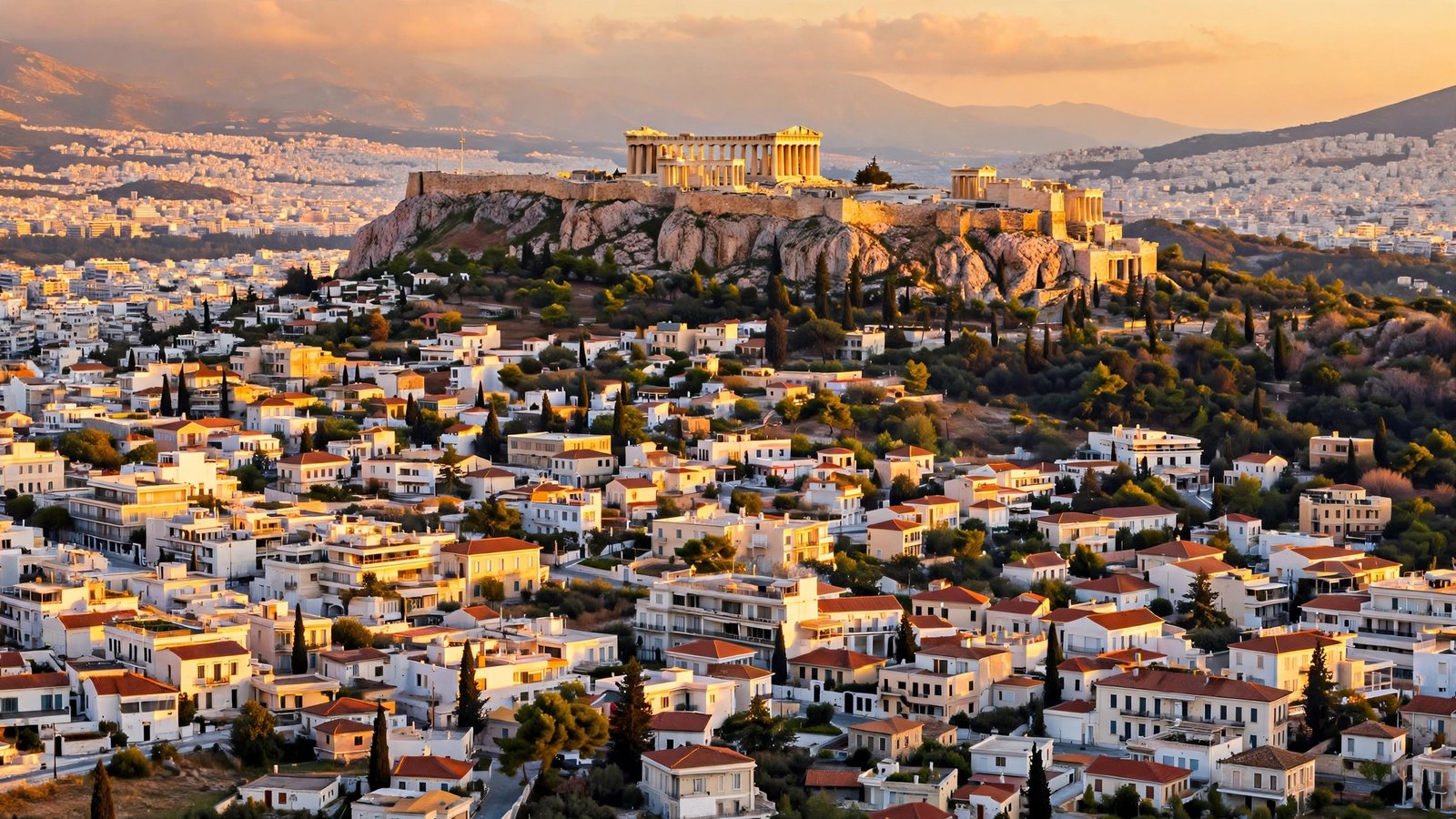
Greece is one of the world’s defining tourist destinations — and one of its safer ones. If you are asking “is Greece safe for tourists,” start with the official answer: the US State Department rates Greece at Level 1, “Exercise Normal Precautions,” the lowest advisory tier, shared with countries like Iceland, Japan and Portugal.
Level 1 does not mean “nothing can go wrong.” It means the risks are the ordinary ones of travel rather than anything structural — and in Greece those ordinary risks are specific and well known: pickpockets working the Athens metro, summer heat that closes the Acropolis at midday, bar scams in port districts, and the occasional wildfire or ferry delay in August. This guide covers each of them honestly, with the same source-led approach we use for very different destinations such as is Bali safe to travel to.
Is Greece Safe for Tourists? The Overall Picture
Greece’s crime profile is dominated by theft, not violence. Violent crime against tourists is uncommon, gun crime is rare, and the Greek islands in particular run at a village tempo where the main security technology is everyone knowing everyone else. The State Department’s guidance, which you can read in full on the Greece country information page, focuses on petty crime in crowded areas, demonstrations in central Athens, and sensible awareness — not on avoiding anywhere in particular.
Two calendar realities shape a Greek trip more than crime does. The first is heat: July and August routinely push past 95°F (35°C) in Athens, and in recent heatwaves authorities have closed the Acropolis during the hottest midday hours for the safety of visitors and staff. The second is protest culture: Athens demonstrations are frequent, announced in advance, centered on Syntagma Square and university districts, and almost always avoidable by simply routing around them.
Everything else in this guide is refinement. Greece is a Level 1 country where normal city awareness — the same awareness you would use in Paris or Chicago — covers nearly everything.
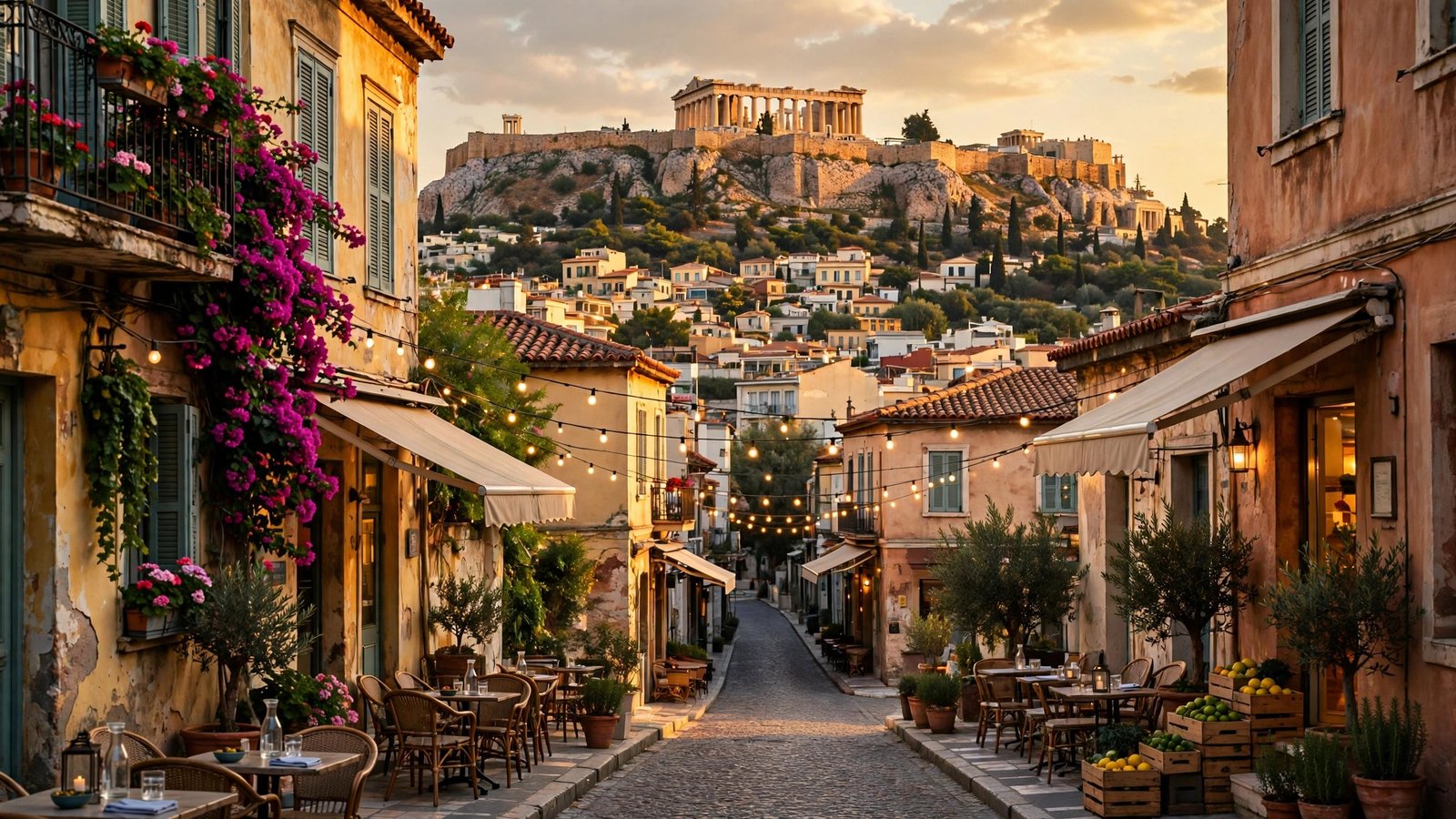
Athens Safety Tips
Athens is a big, energetic capital, and it asks for big-city habits rather than fear:
- Guard the metro ride. Pickpocketing concentrates on the crowded airport line and around Monastiraki, Omonia and the Piraeus interchange — bag in front, wallet in a front pocket, phone away during the crush at the doors, which is where the bump-and-lift teams work.
- Be selectively wary around Omonia at night. The square and some surrounding streets are scruffier after dark; most visitors simply stay in the well-lit triangle of Syntagma, Plaka, Monastiraki and Kolonaki and never think about it.
- Use app taxis or insist on the meter. Athens taxis are inexpensive by US standards when the meter runs. Apps such as FREENOW (and Uber’s taxi option) remove disputes entirely; from the airport, the flat-rate scheme to the center removes the negotiation too — confirm the current official flat rate before you ride and check current prices at booking time.
- Take the Acropolis early or late. Book the first entry slot of the day in summer: cooler, quieter, and ahead of both the heat closures and the cruise crowds.
- Carry water and respect the sun. Shade is scarce on archaeological sites; Greek summer sun at midday is a medical issue, not a comfort issue, especially for children and older travelers.
- Keep accommodation details offline-ready. Plaka’s lanes confuse map apps; a screenshot of your hotel’s address in Greek settles taxi conversations instantly.
Pickpockets, Bar Scams and the Classic Plays
The Athens scam with the longest pedigree is the “friendly stranger bar” routine, worked mainly around port and nightlife districts: a charming local (or a friendly couple) invites you for a drink at a bar they know, the bill arrives at many multiples of normal, and large gentlemen materialize to encourage payment. The defense is absolute and simple: choose your own bar, every time.
The rest of the repertoire is standard Mediterranean port-city material:
- Restaurant bill padding in the most tourist-saturated corners — check the bill against the menu prices, particularly for seafood sold by weight, where you should agree the price of the actual fish before it is cooked.
- Taxi “broken meters” and scenic routes — solved by apps or the airport flat rate.
- Distraction theft at café tables — the phone under the map, the petition, the spilled drink. Keep devices off the table edge in crowded areas.
- Fake “help” at ticket machines and ATMs — decline assistance, shield your PIN, and use machines attached to banks.
None of this is Greece-specific — it is the shared inheritance of every beloved Mediterranean destination, and Greece’s version is, if anything, milder than most.
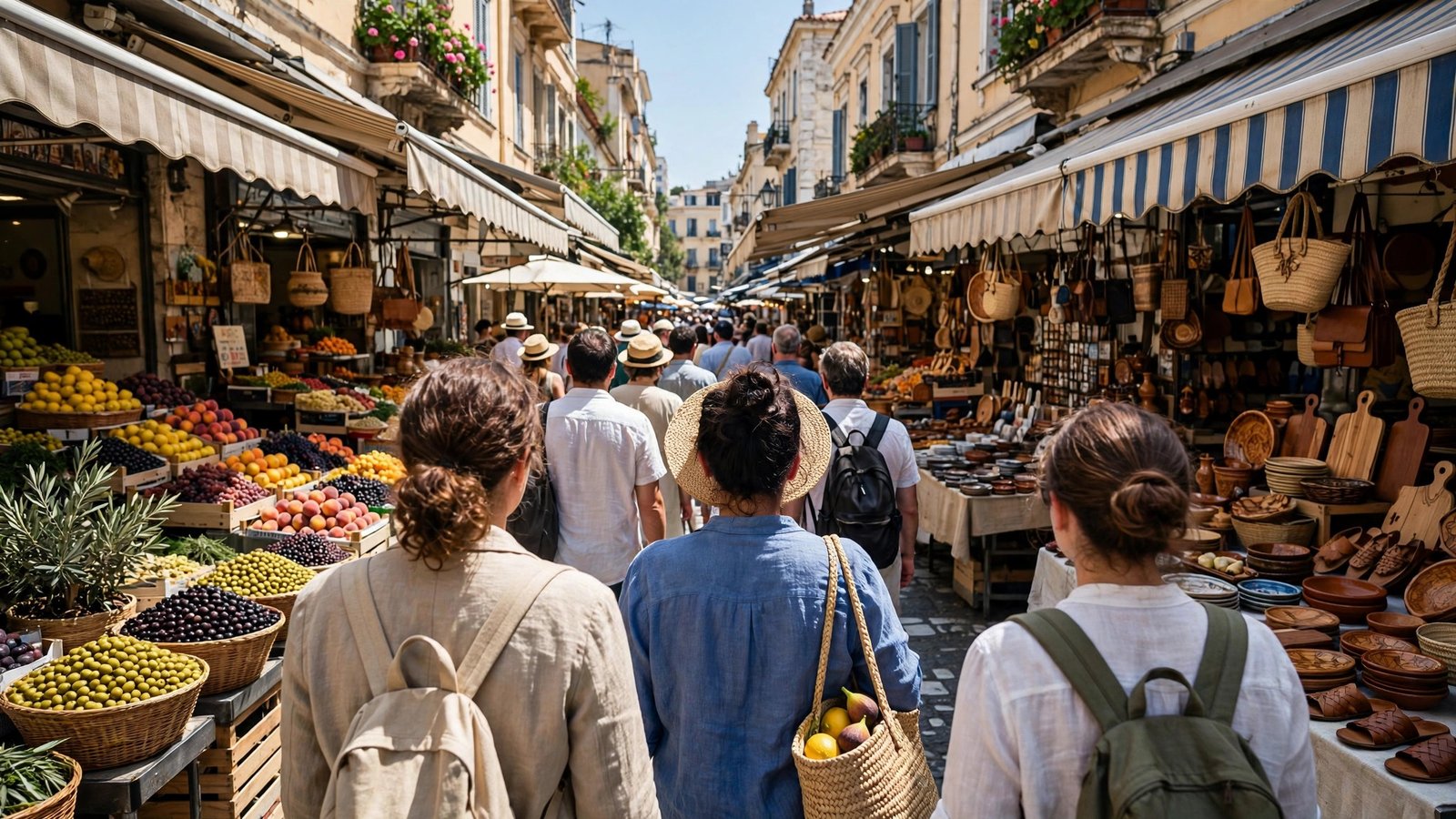
Protests, Strikes and Getting Around the Disruption
Athens demonstrates often — general strikes, student marches and union rallies are part of the city’s civic rhythm. They are announced ahead of time, they center on Syntagma Square, the university and the route to parliament, and while Greek protests occasionally produce scuffles at the edges, the standard visitor experience is a closed street and a changed bus route.
The travel-relevant cousin of the protest is the strike: transport strikes periodically stop the metro, ferries or domestic flights for 24 hours, usually with several days’ notice. Build a little elasticity into Greece itineraries — do not schedule a ferry-to-flight connection with two hours of slack on any day, strike or not — and check local English-language news (the US Embassy in Athens also posts demonstration and strike notices) during your stay. If you do encounter a march, the etiquette is simple: leave the street to the marchers, admire Greek democracy from a side café, and take the long way around.
Greek Islands Safety
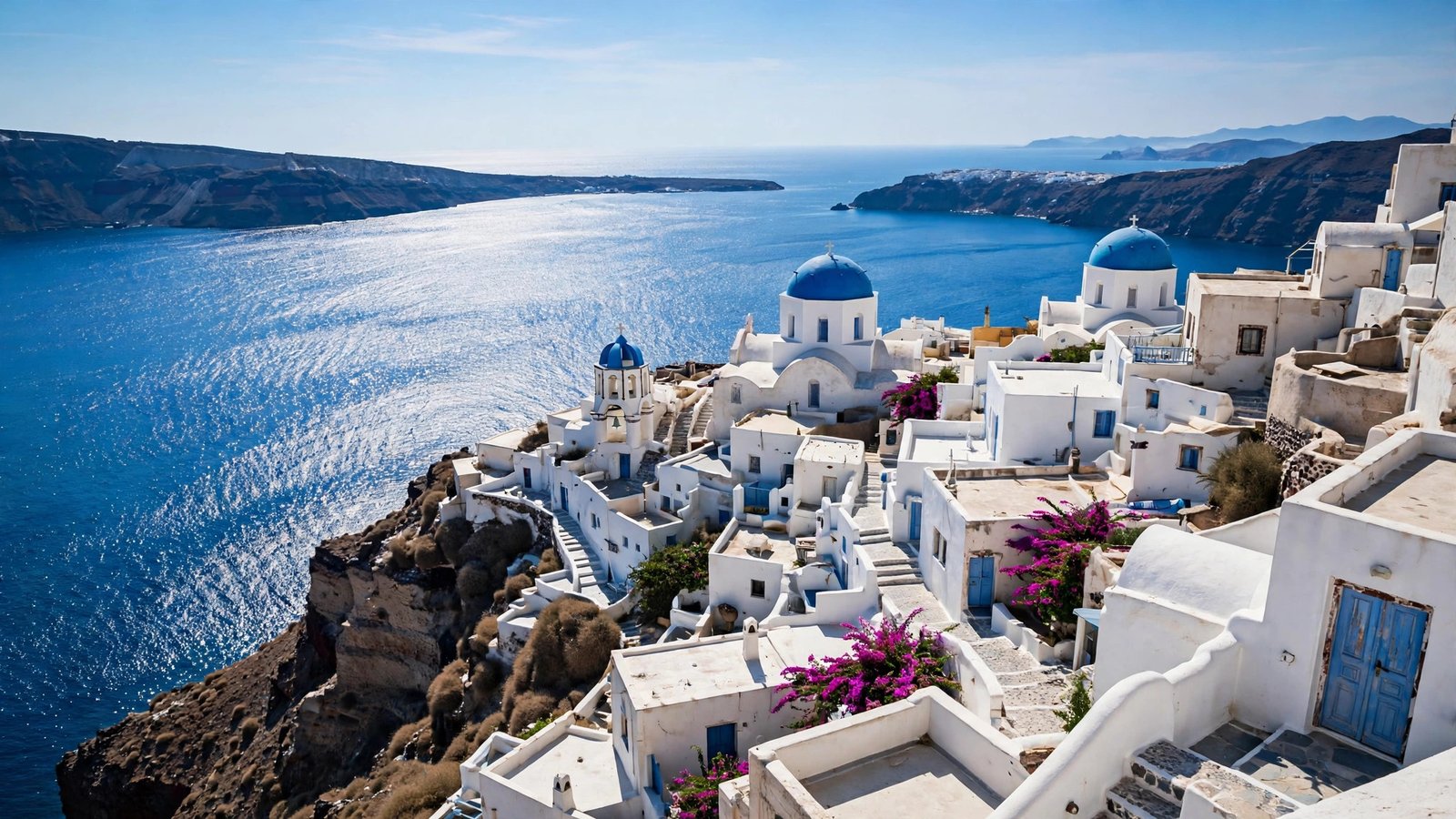
The islands step the tempo — and the theft risk — down another level. On Santorini, Mykonos, Naxos, Paros, Crete and the hundreds of smaller islands, the safety conversation changes subjects entirely:
- Scooters and ATVs are the number-one island injury source. Rental outfits will offer quads to anyone; the combination of narrow roads, loose gravel, blind bends, holiday mood and unfamiliar vehicles fills island clinics every summer. Rental cars are the safer spend, and if you do rent two wheels, a valid motorcycle license is legally required for larger scooters — and your insurance will ask for it after any accident.
- Ferries are safe and occasionally weather-bound. The meltemi winds of July and August can delay or cancel high-speed catamarans; conventional ferries are steadier. Book the flexible ticket for tight connections.
- Swimming conditions vary fast. Lifeguarded organized beaches are the default good choice; on exposed northern coasts, respect local flags and the meltemi-driven surf, and never swim alone off remote beaches.
- Island medical care is basic. Small islands have health centers, not hospitals; serious cases are transferred to Athens or a regional hospital. Travel insurance with evacuation cover is the standard recommendation — the same conclusion our Iceland safety guide reaches for a completely different landscape.
- Cash still matters. Card acceptance is wide but not universal in small villages, and the lone ATM in a small port empties on August weekends. Carry a cushion.
Heat, Wildfires and Natural Events
Summer in Greece is a natural-hazard season in two registers. The first is heat itself: plan archaeological sites and hikes for before 11 a.m. or after 5 p.m., treat midday as the Greeks do (long lunch, shade, siesta), and take heat exhaustion seriously — it escalates quietly.
The second is wildfire. Hot, dry, windy summers have brought serious fires to parts of Greece in recent years, including evacuations of resort areas on Rhodes and near Athens. Greece’s 112 system sends multilingual emergency alerts to phones in affected areas — if your phone receives one, follow its instructions immediately, and obey local authorities and hotel staff without debating the itinerary. Booking refundable rates for peak-fire-season travel (late July and August) is simple prudence, and following local news during your stay is part of the package.
Earthquakes deserve one calm sentence: Greece is seismically active, small tremors are common and rarely consequential, and buildings in tourist areas are constructed to modern codes — know your hotel’s evacuation route as you would anywhere.
Health, Water and Practical Basics
Athens tap water is safe and good. On some smaller islands, water is shipped in or desalinated, and locals may drink bottled for taste rather than safety — follow your accommodation’s advice. Pharmacies in Greece are outstanding, marked by a green cross, and pharmacists handle most minor travel ailments on the spot.
Emergency services answer on 112 across Greece, the EU-wide number, with English-speaking operators. The US Embassy is in Athens and there is a Consulate General in Thessaloniki. For destination inspiration once the safety homework is done, our roundup of the best places to travel includes several Greek favorites.
Driving on the Mainland
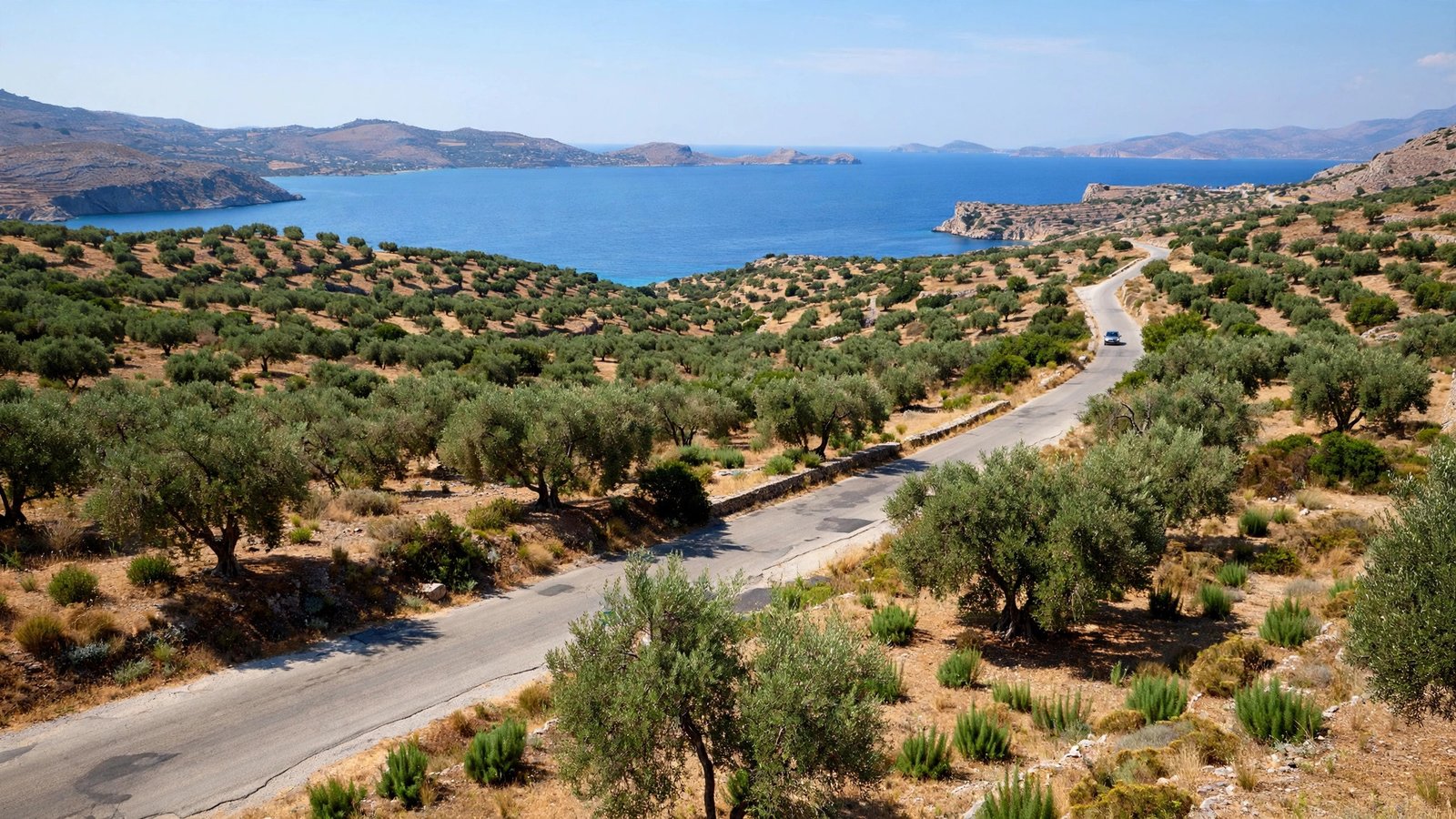
Renting a car is the best way to reach the Peloponnese, Delphi, Meteora and the mountain villages — and Greek driving rewards confidence without aggression. Motorways between major cities are modern toll roads in good condition. The adjustment areas are the older national roads and mountain routes: expect narrow lanes, slow trucks on blind corners, enthusiastic local overtaking, and goats where goats decide to be. Drive defensively, never assume the car behind will wait, and let faster locals past rather than matching their pace.
Practicalities: an International Driving Permit alongside your US license is required for rentals in Greece, seatbelts are mandatory, and drink-driving enforcement is real and strict. In Athens itself, skip the car entirely — the metro, trams and app taxis cover everything a visitor needs, and parking is a competitive sport.
Frequently Asked Questions
Is Athens safe at night? In the central districts visitors actually use — Plaka, Syntagma, Monastiraki, Kolonaki, Psyrri — yes, with ordinary awareness. Use well-lit streets, app taxis for longer hops, and give the scruffier blocks around Omonia a miss after dark.
Is Greece safe for solo female travelers? Greece is a long-established solo female destination, and the islands especially are reported as easy and relaxed. Standard habits apply: share your itinerary, moderate the ouzo, and trust the instinct that says leave.
What is the biggest safety risk in Greece? For most visitors it is the unglamorous trio: pickpocketing in Athens, heat in July and August, and scooter or ATV accidents on the islands. All three are highly preventable.
Do I need travel insurance for Greece? It is not an entry requirement, but medical and evacuation cover is strongly sensible — particularly if your trip includes small islands, scooters, or peak wildfire season.
The Bottom Line
Is Greece safe for tourists? It is a Level 1 country with a big capital that rewards ordinary city smarts and islands that reward slowing down. Beat the Athens pickpockets with a front pocket and an app taxi, schedule around the midday sun, treat island scooters with respect and keep an ear on 112 alerts in fire season — and what remains is the Greece travelers have loved for generations: hospitable, luminous and easy.
