
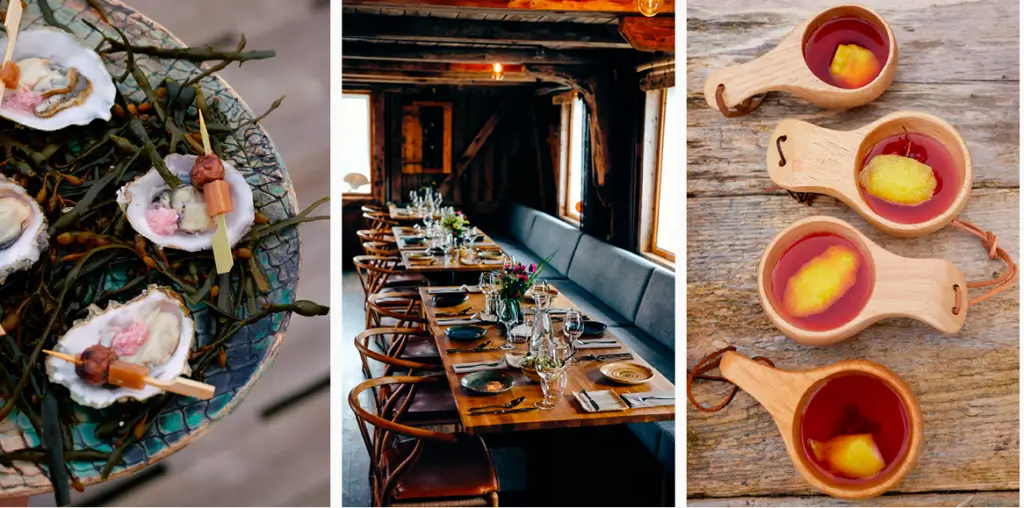
Spectacular archipelago of Lofoten in northern Norway has become known among the global community due to its dramatic scenery, great mountains, gleaming fjords, and beautiful fishing villages that look like they are on a postcard. However, there is one more gift of nature, which every tourist should unravel: the original and tasty food of Lofoten. The issue of food here is not about filling the stomach, but of storytelling, heritage, and tradition over centuries. The food that is produced in this area reflects the spirit of survival in a severe climate; the sea and land were the sole providers.
When the tourists come to Lofoten, they soon notice that the local food delicacies are something they have never tried before. All bites are stories of life, strength, and unity with nature, starting with dried fish that has been refined over the course of millennia and all the way to wild berries picked at midnight under the sun. The food in Lofoten is not only about the taste, but also is about the connection to the culture and the way of life of locals, who have relied on the sea, mountains, and the seasons to feed them.
The other thing that is outstanding regarding Lofoten food culture is its authenticity. Though the cuisines of the world tend to mix and lose their background, Lofoten has been able to maintain its culinary focal point, as well as receive a new trend. Be it at a small fisherman’s cabin, termed as rorbu, or at an expensive restaurant, with a sea view, the same traditional flavour of the food will shine through. This genuineness is what makes the food specialties of Lofoten not only the meals but also the experience, and leaves the travelers with memories that they will never forget.
The Role of Local Cuisine in Lofoten’s Local Food Specialties
A Legacy Built on the Sea.
Lofoten cuisine cannot be separated from the geography. The archipelago, which is located at the Arctic Circle, has been using the sea as its lifeline for centuries. Cold Norwegian Sea waters are considered by far the most abundant fishing grounds in the world, especially when it comes to cod. The fishermen have been feeding their families through the ocean, and this attachment to the sea has affected every facet of food culture here. The local cuisine is a testimony of a perfect balance between humanity and nature, starting with the preservation techniques, to the ways of cooking.
Fishing was a survival game, but a trade network was the result. Lofoten dried fish were sold even to Italy, Spain, and Africa. This international need has made Lofoten one of the most significant fishing areas in Europe since the Middle Ages. Consequently, food turned out to be a cultural icon and an economy that defined the identity of the islands.
Geography and Climate as Flavor Architects
The rough topography and the Arctic climate of Lofoten were also critical in determining the foods consumed by people. Agricultural land is scarce on the islands; thus, fishing has taken up the lead role as a source of livelihood. Nevertheless, the residents came to know how to use the little areas of fertile land to produce root crops and raise animals, including sheep. The drastic weather conditions also influenced the foods–winters needed hearty preserved food, and summers had fresh catches and wild foraged edibles.
The contemporary food habits in Lofoten are still affected by this seasonal cycle. People who travel at other seasons of the year will see the menus vary with the availability of the ingredients. Winter can also introduce warm meals such as stewed fish stock, and summer has brought on a lot of fresh cod, lamb, and wild berries. The beat of nature is still used to guide the kitchen to remind the visitors of the close relationships between food and environment.
Food as a Cultural Identity.
In Lofoten, food is not merely something to eat- it is a sign of identity. Islanders have been proud of their cuisine, and generations have preserved their recipes and customs, which are still living. People consider their food to be a reminder of survival in extreme arctic weather, a representation of innovation, and a link to their forefathers who have made a living out of the sea.
To the tourists, a taste of local delicacies is a form of appreciating the cultural essence of Lofoten. It is not only the taste but the history and the way of life of a community based on the extremes of nature. That is the reason why food tourism has become a new attraction in Lofoten; each meal is a chance to put your feet in the shoes of the people whose homeland is the archipelago.
Stockfish – The Pride of Lofoten
Centuries-Old Drying Tradition
Stockfish is the pride of Lofoten among all the local specialties. It is a sophisticated dish composed of unsalted cod that has been sun-dried outdoors and has been the staple of the cuisine and the economy of the islands throughout the course of one thousand years. The climate of Lofoten offers the most ideal conditions for fish drying of all other preservation practices relying on salt or smoke, since the climate is cold, dry, and the winds remain consistent throughout the year. The outcome is a product that can be stored over the years without a decrease in nutritional value and flavor.
Stockfish does not only serve as a food; it is a representation of the history of the area. As archaeological data reveals, the production of stockfish was already going on in Lofoten since the Viking Age, when they used to use it not only as food but also as a medium of exchange. Still today, contemporarily popular preservation techniques notwithstanding, the stockfish is still produced in the same manner as the old, hanging on huge wooden racks referred to as hjell, covering the coastal landscape throughout the drying season.
Global Influence of a Local Product
The most outstanding thing about stockfish is its worldwide movement. Since the Middle Ages, Lofoten stockfish has become one of the most popular exports, particularly in southern Europe. In Italy, it is baccala, as in Portugal, it is bacalhau. These food relationships formed cultural links, and Lofoten became an unforeseen source of Mediterranean cuisine. Even today, thousands of tonnes of stockfish are shipped each year, bringing the Arctic flavours to the world’s kitchens.
The economy of the islands was formed not only by this global demand but also strengthened the cultural pride of the residents. Stockfish to them does not only mean survival or trade, but it means being an ambassador of their heritage to the rest of the world. When tourists sample stockfish in Lofoten, they are not just trying a delicacy, but they are also taking part in a tradition that has shaped other diets way beyond Norwegian borders.
Unique Flavor and Culinary Uses.
To the first-time stockfish consumers, the initial taste of the stockfish can be shocking but pleasing. The fish is further dried to add flavor to the fish and make it firm in texture and rich in taste, and concentrated. Local cooks cook stockfish in various recipes, ranging from the simplest of stews to sophisticated recipes that create a blend between tradition and innovation. It is most commonly served in a dish known as boknafisk, in which the fish is not fully dried, and this provides a softer texture and a softer taste.
Stockfish will also be served with other modern ingredients in fine-dining restaurants, where the chefs will experiment with the feel and flavor. Being a classic dish, accompanied by boiled potatoes and vegetables, or a modern gastronomic masterpiece, regardless, stockfish is the blood and soul of the food industry in Lofoten. It is not just a delicacy that you need to experience, but one of the icons of food and identity in the Arctic.
- Viator Travel Agent: Complete Guide to Booking Tours
- 100+ Travel Quotes to Inspire Your Next Adventure
- Union Square Travel Agency: Expert Travel Services & Deals
- GeoBlue Travel Insurance: Plans, Benefits & Coverage Guide
- Travel Images: Best Photos, Ideas & Usage Tips
Freshly Caught Cod Dishes in Lofoten:
Cod as the Lifeblood of the Islands.
Cod is the ingredient that could be considered defining the food culture of Lofoten, in case of the absence of one more item: stockfish. Millions of cod leave the Barents Sea for the Lofoten coast each winter, to spawn and produce one of the fishing seasons of the world. This migrating code, locally called skrei, is a firm-bodied and delicately tasting fish that has long been a favourite in the culinary tastes of the times. To the inhabitants of Lofoten, cod is not just any other, but the pulse of their lives and their food.
Cod fishing is already a traditional form of economic activity as well as an event. Families have been established around the cod season, and the thrill of the winter catch is still felt to date in the local communities. The influx of skrei not only stocks fishing boats, but also kitchen tables, delivering with it the dishes that are the main staple in Lofoten.
Traditional Recipes That Tell Stories.
Cod is a multifunctional one, and the manner in which it is cooked in Lofoten tells a history and inventiveness. A very ancient dish is molje, which is a meal consisting of cooked cod with its roe and live,r normally accompanied by potatoes. This is a very simple dish, but it, in a way, takes the entire essence of the fish, so that none of it is wasted–and this is very much ingrained in the saving-type of Arctic life.
The other traditional dishes include lutefisk, which is coded that has gone through the lye process and then rehydrated before cooking. Although this might be an odd thing, especially to new visitors, lutefisk is a traditional festive food in Norway and is commonly linked with Christmas festivities. It reminds us in Lofoten how the primitive means of preservation transformed need into custom. To those who want something lighter, you must not pass grilled fresh cod fillets with butter, herbs, and seasonal vegetables.
Why Travelers Love Lofoten Cod.
The beauty of the surroundings is what makes Lofoten cod unlike the other types. The Arctic waters are clean and cold and yield fish that is lean, firm, and loaded with natural flavor. Dining in Lofoten can be described as a special food experience due to the fact that travelers tend to comment on the difference in taste between the cod they have tasted in other places.
Cod is also finding new ways of being reimagined by the modern chefs by combining it with global ingredients and still respecting its heritage. Cod dishes will offer both comfort and elegance to the visitors either in a rustic fisherman’s cabin or a Michelin-inspired kitchen. The meal of cod in Lofoten is not merely a meal; it is an experience with the heart of the islands.
Lamb from Lofoten’s Open Pastures:
A Taste Shaped by Nature
Although the sea is taking away the majority of the cuisine in Lofoten, the land possesses its wealth as well, and lamb is in first place in the list. The most notable aspect of Lofoten lamb is the grazing behavior of the animals. The sheep are brought up in open fields that wander freely all through the mountain ranges, meadows, and coastal terrains, and they graze on the wild grasses, herbs, and even seaweed. The meat tastes very natural–mellow and yet full, sweet but smelling of flowers.
Sheep farming in Lofoten is another form of farming that is closely related to the land, unlike industrial farming. The animals coexist with the environment they inhabit, and they roam in the summer months, and in their winter months, they go back to barns. This is an environmentally friendly method of raising livestock that has been done over generations, and the meat produced bears the quality and the tradition. To the food lovers, they get to taste the purity of the Arctic farming through tasting Lofoten lamb.
Signature Lamb Dishes.
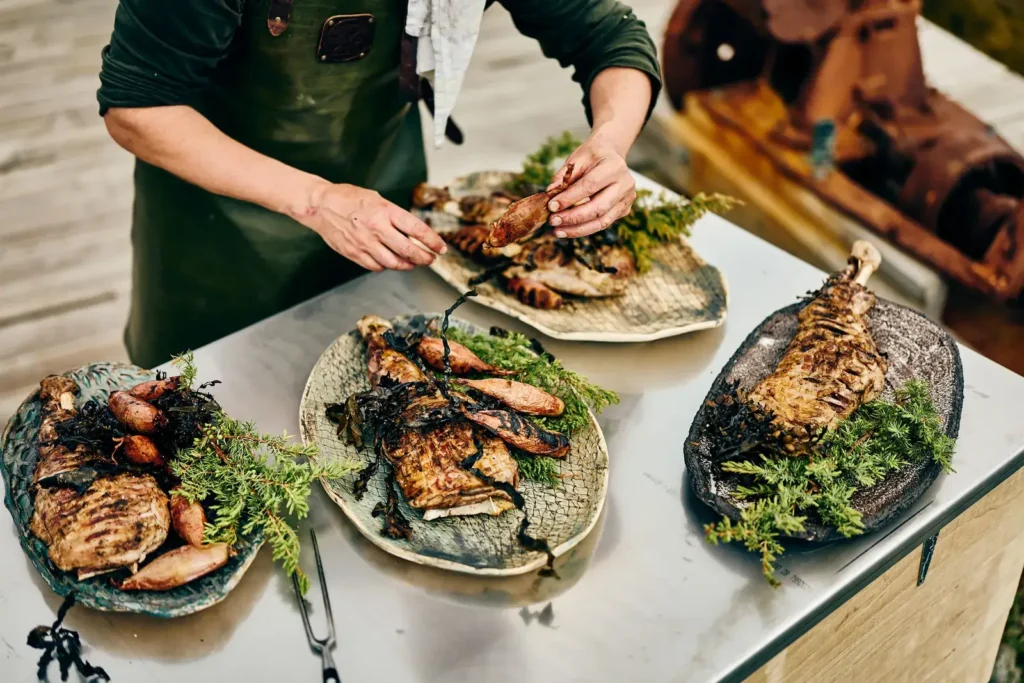
On the islands, Lamb is found in numerous traditional cuisines. Among the most popular ones is farikal, the national dish of Norway, which means mutton in cabbage. This is a hearty stew made of lamb, cabbage, and black peppercorns, which are left to simmer until the flavours blend into a warm meal. It is especially famous in the fall, when the cooler weather is in need of warming food.
Pinnekjott (dried and salted lamb ribs that are typically served during Christmas) is another specialty. Although the dish is used in all of Norway, the lamb of Lofoten adds another layer of flavor to it due to the diet of the sheep being unique. Another dish that visitors will find is the roasted lamb with root vegetables or grilled lamb chops with local herbs, both of which bring out the naturalness of the meat.
A Farm-to-Table Experience.
The proximity of farm-to-table experiences is one of the things that makes the experience of savoring lamb in Lofoten unforgettable. Tourists usually get an opportunity to visit nearby farms, meet the families who farm the animals, and understand how they practice sustainability efforts. Such a relationship enriches the dining experience as it not only makes a meal a cultural experience.
Local restaurants on the islands are happy to offer locally produced lamb, and they accompany it with local products such as wild berries or mushrooms to make it truly local. To the tourists, having Lofoten lamb is not only a tasting experience of a delicious meal, but also a way to experience the landscape, the people, and the traditions that make the archipelago stand out from the crowd.
Arctic Berries and Wild Ingredients
Foraging Under the Midnight Sun.
The wild harvest of Lofoten is one of the most captivating culinary features. Although the climate is too harsh in the Arctic, summer days have long-term sunlight that permits a wide range of surprising berries and herbs to grow. To locals, foraging is a practice as old as fishing and has been transmitted through generations as a means of filling diets with fresh and seasonal tastes. To the tourists, these wild dishes are akin to consuming the untouched taste of the Arctic land.
The best-known of them is the cloudberry, commonly termed the gold of the Arctic due to its rarity as well as rich taste. Cloudberries are also marketed in marshy lands; their sweet-tart flavor and golden-orange hue help them gain great popularity. With cloudberries, visitors may also find blueberries, lingonberries, crowberries, and wild herbs that will provide special details to savory and sweet foods.
Culinary Uses of Arctic Berries
The use of arctic berries in the cuisine of Lofoten takes a very diverse form. Cloudberry jam is a popular one; it is usually served with waffles, pancakes, or cheese. There are blueberries and lingonberries that are served on meat dishes, particularly lamb and game. Berries, tarts, puddings, and ice creams are served as desserts and emphasize the natural sweetness of these wild fruits, making plain meals into exquisite delights.
Besides berries, foragers also harvest herbs, including angelica and wild sorrel, which are used to liven up the traditional dishes. Mushrooms are also involved, and they are harvested in forests and paired with fish or meat to give them earthy and comforting tastes. This custom of utilizing the offered resources by nature speaks of the ingenuity of Arctic life and the admiration that the locals have towards their surroundings.
A Symbol of Seasonal Living:
Gathering wild berries and herbs is not a simple gastronomic event, making it a lifestyle. During the summer day, families gather together and share information regarding where they can get the best harvests and when. As a tourist, one can embark on a foraging tour or sample the meals prepared with freshly picked berries and get a glimpse into this cycle of the season.
The tastes of the berries of the North are memorable and not merely due to their taste but also due to the legends that they are associated with. They are representative of the summer bounty of the Arctic, which is brief in comparison with the long dark winters. They should try to experience the magic of the midnight sun and the stability of a culture that lives in harmony with nature.
Cheese and Dairy Traditions in Lofoten:
A Small but Rich Dairy Heritage
Although Lofoten has been hailed as the seafood capital, dairy products are also a big part of the cuisine in the area. The islands do not appear to possess the sheer pastures, such as those in southern Norway, but the dairy farms here are also reputed as devoted to quality rather than quantity. Small-scale farmers feed cows and goats in clean arctic conditions where they graze on rich grass over very brief but fruitful summers. The outcome is the milk and dairy products with the special flavor profile of being creamy, rich, and slightly tangy in their taste and the flavor characteristics reflect the purity of their natural environments.
To the tourists, when it comes to the local dairy, it is not only about tasting milk or cheese but also the artisanship of local farmers who still practice old techniques in a new world. All the products indicate diligence, patience, and pride of those who keep the traditions of the uncivilized north alive.
Traditional Cheeses and Local Favorites
The dairy culture of Lofoten is centred around cheese. Among the most popular types in Norway is a type of cheese called brunost or brown cheese, prepared with the whey that is gradually caramelized into a sweet fudge-like paste. Much as it is not unique to Lofoten, it is a common dish in homesteads throughout the islands, with waffles or crispbread. The visitors are usually surprised by its sweet taste because they are accustomed to salty, savory cheeses.
In Lofoten, goat cheese is also commonplace, and small farms make soft fresh cheeses which go well with wild berries or honey. Another popular item is the yogurts and cultured dairy items, which provide not only nutrition but also warm comfort during colder seasons. To those people who like to visit local markets or farm shops, the experience of trying these artisanal products is a journey to the taste of the Arctic dairy traditions.
Pairing Dairy with Lofoten Cuisine.
The pleasure of the dairy products in Lofoten is in the fact that they blend so well with the overall cuisine. One of the traditional breakfast dishes is a slice of brunost on fresh bread and a cloudberry jam. The soft goat cheese goes along with the lamb meals such that it giving a sourness contrast to the meat richness. In seafood, too, dairy will be compatible, with cod or stockfish being served with creamy sauces to tame the boldness.
These two dishes are an opportunity for tourists to experience how residents mix the sea and land in their dishes, mixing dairy with the local special products. It is evidence that even the most basic thing in Lofoten, cheese, can narrate a tale of tradition and creativity.
Baked Goods and Traditional Treats:
The Comfort of Homemade Baking.
The Norwegian baking culture is a particular aspect of the Lofoten cuisine. Winters are long and dark in a land, and the coziness of freshly baked products has given comfort and nourishment. Baking is not merely food–it is family, festivities, and the happiness of sharing. Baked goods, whether hard or soft, pastries, sweet or savory, may be simple and hearty, yet also luxurious; the baked specialties of Lofoten.
As one walks in small towns and fishing villages, he or she will be likely to be greeted by the appetizing aroma of baking in the local cafes or family kitchens. Such snacks are not just snacks; they are associated with memories and traditions, so they are an important component of the local lifestyle.
Traditional Breads and Pastries
Other typical dishes of Lofoten baking include lefse, a very thin flattened bread prepared with potatoes, flour, and milk, commonly with butter, sugar, or cinnamon. Lefse is a very basic dish, but it is popular in Norway, as well as an obligatory one that a person will need to taste in the area. Flatbread is another popular dish, which is a crispy flat bread and which was historically used as a replacement for utensils to scoop fish or stews.
On the sweeter side, krumkake (thin, cone-shaped cookies full of cream) and skillingsboller (cinnamon buns) are favored particularly on holidays and when celebrating families. Each pastry has its story, which is usually connected with celebrations of a certain time of the year or religious customs.
Baking as a Social Tradition:
The uniqueness of the baked goods in Lofoten is the cultural tradition of baking as a social activity. Families also get united to make huge quantities of bread or pastries, particularly during Christmas. Such meetings are not entirely about food, but about interconnectedness, fun, and sharing recipes with the younger generation.
To the visitors, it is possible to eat such baked specialties in a small cafe or in a local home and feel like you are a part of their community. The cuisines can be basic, yet the warmth and hospitality involved are something to remember.
Local Drinks – From Coffee to Craft Beer
Coffee Culture in the Arctic
Norwegians are the best coffee consumers in the world, and Lofoten is not an exception. Even though the islands are remote, they have a vibrant coffee culture, which fuses traditional and recent trends of cafes. Fishing villages have always had coffee, which provided them with warmth and energy on a long working day at sea. It is still practiced daily nowadays, eaten by friends, families, and travellers alike.
As a visitor, one will easily discover that coffee in Lofoten is commonly served black and strong, though there are modern cafes that are serving specialty brews and espresso-based coffee. When you can have your cup of coffee and enjoy the view of the Arctic scenery, it can be an experience other than just a comforting one.
Local Brews and Beverages
Besides coffee, Lofoten has adopted the craft beer trend. There has been the emergence of small breweries in the islands, which have been making beers with local flavors and ingredients. Other brewers experiment with Arctic herbs or berries and come up with special drinks that accompany fish or lamb very well. One of the ways through which travelers can feel the creativity and innovative nature of the contemporary food industry of Lofoten is by tasting one of the locally brewed beers.
Also, traditional drinks have their way. The Nordic spirit is known as aquavit, which is flavored with such herbs as caraway and dill and is sometimes served with festive meals. Another favorite during cold winters is hot chocolate, which is made creamy and rich, and this is a consoling drink after one has been out exploring the snowy scenery.
Pairing Drinks with Food.
The peculiarity of drinks in Lofoten is that it is compatible with the local cuisine. Coffee neutralizes the sweetness of the pastry, such as krumkake or cinnamon buns. Craft beers are suitable to go with fresh cod or roasted lamb, whereas aquavit is used to add a festive addition to celebratory dishes. Even a simple thing such as a warm mug of cocoa can be extraordinary when accompanied by a slice of the lefse or the bread with brøsttopp.
To visitors, tasting these drinks does not only involve drinking, but it is also about how people of these countries find a balance in their food, combining tradition, creativity ,and comfort.
Dining Experience in Lofoten
Small Cafés and Family-Run Eateries.
Food is not everything in dining in Lofoten; it is the experience. There are cafes and family-owned restaurants all over the islands, where people come to receive a warm and hospitable welcome. Most of these restaurants are found in converted fisherman cabins, rorbuer, where home cooking is combined with rustic appeal. Dining here is like entering the living room of a person where dishes are cooked using generations-old recipes.
The menus have been simple, but flavored most of the time. Cod, homemade bread, and desserts made of berries are the new menu, and they are served in substantial quantities that show the value of food to the islanders, who do a lot of work and are in need of nourishment. To tourists, such modest restaurants give them a true experience with the people and culture of Lofoten.
Seafood Restaurants by the Sea.
In case some of them want fine food, Lofoten is also equipped with a great variety of seafood restaurants that look out over fjords and harbors. In this case, the chefs mix the old with the new culinary processes to transform the local foods into art. The sight in itself is frequently an ingredient of the experience–suppose you have managed to eat a plate of grilled skrei, and you watch fishing-boats coming back with the haul of the day.
Eating on the beach emphasizes the closeness between food and the scenery in Lofoten. Tastes of the food seem inseparable from the salty wind and dramatic cliffs in the background, which form an exceptional experience in the senses.
Atmosphere and Hospitality.
Wherever you eat in Lofoten, you cannot fail to observe one thing: hospitality. Islanders are proud of their culture by way of food, and the ambience is always welcoming, be it in a fine-dining restaurant or a simple kitchen. Dining out frequently goes beyond the meal phase, becoming a conversation and a storytelling time, which makes the visitors feel like they are part of the community.
Modern Twists on Traditional Foods:
Chefs Blending Old and New
Although tradition is the key to the cuisine in Lofoten, innovation has not been left out either. The young cooks and restaurateurs are redefining old recipes, and they come up with dishes that honor the past but are the ones that welcome the future. Stockfish can be eaten as suggested with exotic spices, lamb can be consumed with Asian marinades, or Arctic berries can be made into fancy dessert sauces. Such contemporary inclinations appeal to food lovers the world over, and this goes to show that even in the Arctic, there is no limit to culinary imagination.
Influence of Tourism on Cuisine
Tourism has contributed a lot to this development. With the increasing number of visitors keen to have the traditional taste, local cooks have been trying to reconcile between tradition and the global taste. Menus have become more rustic and more innovative so that they have something to suit every palate. This amalgamation has not watered down the identity of Lofoten; on the contrary, it has enhanced its identity, enabling the local food to shine in the world scene.
Innovative Food Experiences
Over the last few years, food experiences have become a part of travelling in Lofoten. Visitors can experience the culinary culture by foraging tours or cooking classes, visiting a farm, or having dinners with the chef. These experiences can not only enable travelers to eat but also to take part in learning how the dishes are made and what the stories are behind the dishes.
Why Food is the Heart of Lofoten Travel
Taste as a Memory.
In Lofoten, food is not, however, a sustenance, but a memory in the form of food. To the traveler, fresh cod, the sweetness of cloudberries, or the richness of lamb will have the power to make a trip a lifetime memory. These are the flavors that come to mind whenever a visitor recalls the dramatic scenery, the midnight sun, and the warm welcomes that they received as they travelled.
Connecting with Culture Through Cuisine.
One of the most authentic experiences of getting to know a culture is by trying local food, and it is particularly true in Lofoten. Each of the dishes has a story of survival, tradition, and adaptation in one of the most brutal but also the most beautiful settings in the world. Food is not a supplement to the trip; it is the soul of the trip, providing clues to the strength and ingenuity of the inhabitants of these islands.
Why You Must Taste It All.
To every person intending to visit Lofoten, experiencing the food culture is as significant as exploring the scenery or the Northern Lights. It would be a loss of the soul of the islands to avoid the cuisine. At a fisherman’s cabin or at a fine-dining restaurant, each morsel of food will make you feel closer to Lofoten.
FAQs:
What is the most famous food specialty in Lofoten?
Stockfish is the most renowned delicacy; it is a typical type of dried cod that has been in production since ancient times and is exported all over the world.
When is the best time to try fresh cod in Lofoten?
The ideal season is when there is winter and early spring (between January and April), and the migrating skrei cod arrives and spawns.
Are there vegetarian options in Lofoten’s cuisine?
Yes, seafood is predominant, but vegetarian tourists can taste the dishes prepared with Arctic berries, root vegetables, dairy products, and baked breads in the country.
What drinks pair best with local dishes?
Strong black coffee goes well with pastries, whereas craft beers and aquavit with seafood and lamb.
Can I try farm-to-table experiences in Lofoten?
Absolutely. A large number of small farms provide tours in which they provide visitors with a taste of fresh lamb or cheese, or dairy products directly at the farm.
How important is foraging in Lofoten cuisine?
The foraging is very crucial. In summer, locals pick berries, herbs, and mushrooms, which are made into sauces, desserts, and teas.
Why should food be part of every Lofoten travel itinerary?
Since food here is not just a sustenance but the essence of culture, it gives the traveler a genuine understanding of the history, customs, and way of life of the islands.
Conclusion:
Local food in Lofoten is a story about nature, history, and culture combined in an unforgettable taste. The centuries-old art of stockfish and the subtle flavor of fresh cod, tenderness of free-grazing lamb, and the sweetness of Arctic berries, all specialties that are a sort of embodiment of the spirit of the islands. The abundance of dairy, the coziness of baked goods, and the familiarity of local beverages complete a varied culinary landscape that is true to reality.
To the travelers, food does not mean a meal anymore; it is a means to be linked to the land and people. The Lofoten dining experience is characterized by warmth, innovation, and tradition, which bring comfort and adventure. Contemporary cooks make certain that the food is active and in constant motion, whereas locals are not afraid of trying to keep recipes that have become classics.
Finally, the food specialties of Lofoten are not food to be eaten; it is a story to be told. They are the spirit of the islands, and they have offered any visitor a cultural experience with one bite.
