

If you are asking “is Bali safe to travel to,” the honest answer is reassuring: for the vast majority of visitors, yes. Bali welcomes millions of international travelers every year, and most trips are completely trouble-free. The US State Department rates Indonesia as a whole at Level 2, “Exercise Increased Caution,” the same tier as popular destinations like France, Italy and the United Kingdom — and Bali is not singled out for any harsher warning.
That does not mean Bali is risk-free, and the risks are probably not the ones you are imagining. The dangers that actually disrupt Bali trips are mundane: scooter crashes, stomach bugs, petty scams and rough seas. This guide walks through the official picture first, then the practical, everyday safety habits that keep a Bali holiday on track — much as we do in our companion guide asking is Morocco safe to travel to.
Is Bali Safe to Travel To? The Short Answer First
Indonesia’s Level 2 advisory cites terrorism and natural disasters as the headline concerns for the archipelago as a whole. Two things are worth understanding about that rating before it worries you.
First, Indonesia is enormous — more than 17,000 islands stretching across a distance wider than the continental United States. A single country-level rating covers all of it, including regions with very different conditions from Bali.
Second, the sharpest warnings inside the advisory are not about Bali at all. The State Department places two provinces, Central Papua and Highland Papua, at Level 4, “Do Not Travel,” because of civil unrest. Those provinces sit on a different island, well over a thousand miles east of Bali, and they are not on any normal tourist route.
For Bali itself, the official guidance amounts to sensible big-destination awareness: stay alert in crowded places and nightlife districts, keep an eye on local news, and enroll in the free Smart Traveler Enrollment Program (STEP) so the US embassy can reach you in an emergency. You can read the full, current assessment on the State Department’s Indonesia country information page, which is the page to check before any trip because advisories do get updated.
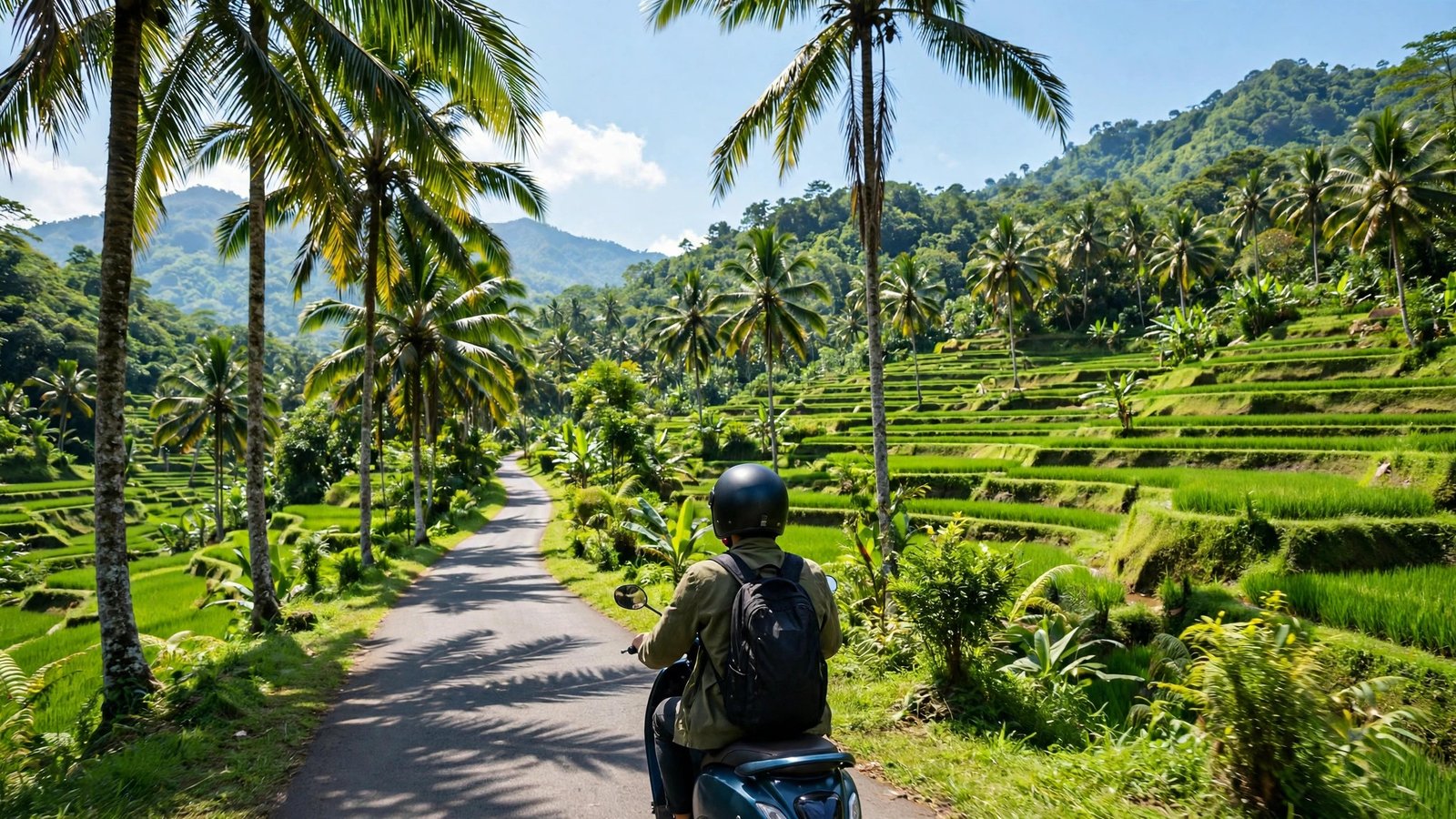
Bali Safety Tips
Most Bali safety advice is unglamorous, and that is exactly why it works. These are the habits experienced visitors rely on:
- Treat the scooter decision seriously. If you are not an experienced, licensed rider at home, do not learn in Bali traffic. Use ride-hailing apps or hire a private driver instead.
- Wear a real helmet, fastened, every single ride, even for two-minute trips. Most serious injuries happen on short hops.
- Drink only bottled or properly filtered water, and use it for brushing your teeth if your stomach is sensitive.
- Agree every taxi fare before you get in, or insist on the meter. App-based rides remove the negotiation entirely.
- Keep valuables boring. A phone left on a café table or a bag dangling on the road side of a scooter is the classic setup for snatch theft in busy resort areas.
- Swim between the flags and respect red-flag warnings; Bali’s south and west coast breaks have powerful rips, especially around Canggu and Uluwatu.
- Leave drinks attended only by you. Australian and US guidance both flag drink spiking and methanol-adulterated alcohol as a real nightlife risk — buy from reputable venues and watch your drink being made.
- Save the local emergency numbers in your phone: 112 works as the general emergency number in Indonesia, and note your hotel’s address in Indonesian for drivers.
Scooters: The Biggest Real Risk in Bali
If one section of this guide deserves your full attention, it is this one. Road accidents are consistently the most common way Bali trips go seriously wrong, and scooters are at the center of it.
Bali’s roads were not built for their current traffic. In the busy south — Canggu, Seminyak, Kuta and the road to Ubud — you will share narrow lanes with trucks, tour buses, dogs, ceremonies and other riders carrying everything from surfboards to building supplies. Add left-side driving for American visitors, sudden rain showers and the occasional pothole, and the learning curve is steep.
Indonesian law requires you to hold a valid motorcycle license from home plus an International Driving Permit to ride legally. Riding without them is not just a police-fine issue: as the insurance section below explains, it can void your travel insurance exactly when you need it most. Police checkpoints targeting foreign riders are a routine sight in the tourist south.
The stress-free alternative is easy and affordable by US standards. Ride-hailing apps such as Grab and Gojek cover the main resort areas, and private drivers for a full day of sightseeing are widely available at reported rates that most visitors find reasonable — confirm the current price and what it includes (fuel, parking, tolls) before you set off, and check current prices again when you book, because rates move with the season.

Health: Bali Belly, Water and Mosquitoes
“Bali belly” — a day or two of traveler’s diarrhea — is common enough to have earned its nickname. It is rarely dangerous for healthy adults, but it can steal days from a short trip. The usual defenses work: eat at busy places with high turnover, be cautious with raw salads and unpeeled fruit from small stalls if you have a delicate stomach, and treat ice from established restaurants as generally fine (it is typically factory-made from purified water) while being warier of crushed ice from tiny roadside carts.
Tap water is not safe to drink in Bali. Most hotels and villas provide filtered refill stations or bottled water; use them.
Mosquitoes matter more than many visitors expect. Dengue fever is present in Bali, and there is no vaccine or pill for it — bite prevention is the whole strategy. Use repellent, cover up at dawn and dusk, and choose accommodation with screened windows or air conditioning. Separately, a CDC travel health notice has covered Zika in Indonesia, which is particularly important for pregnant travelers; if that applies to you, discuss the trip with your doctor before booking rather than after.
For anything serious, the tourist south has modern private hospitals — BIMC and Siloam are the names most visitors end up hearing — but private care is priced privately, which is why medical coverage features in the insurance discussion below.
Scams, Money and Nightlife
Bali’s scam scene is more annoying than dangerous, and nearly all of it is avoidable once you know the shapes:
- Money changers with “too good” rates. A rate noticeably better than everywhere else usually comes with a rigged calculator or sleight of hand. Use banks or established, receipt-giving changers and count your cash at the counter.
- The “helpful” stranger at the ATM. Card skimming has been reported; prefer ATMs attached to banks, shield your PIN, and turn on transaction alerts.
- Taxi overcharging at the airport and in nightlife strips. Pre-booked transfers, hotel pickups or app rides solve it.
- Overpriced “tickets” and tours sold by unofficial touts near attractions. Buy at the official counter or through your hotel.
- Nightlife overcharging and spiking. Settle drink prices up front at unfamiliar bars, and keep your drink in hand.
None of this is unique to Bali — you will find the same playbook in Athens, which is why our guide to is Greece safe for tourists covers a similar pickpocket-and-scams landscape. Awareness, not anxiety, is the right setting.
Natural Hazards: Volcanoes, Seas and Weather
Indonesia sits on the Pacific Ring of Fire, and Bali has active volcanoes, most famously Mount Agung. Eruptions are uncommon but can close airspace when ash is involved, as happened in past years. If you plan to hike Agung or Batur, go with a licensed local guide, start before dawn as is customary, and check the current alert status before committing — conditions and access rules change.
The sea deserves equal respect. Bali’s surf beaches are world-class partly because the swell is powerful; rip currents are the main killer of strong and weak swimmers alike. Swim at lifeguarded beaches, read the flag system, and never turn your back on the water at cliff viewpoints around Uluwatu and Nusa Penida, where rogue waves have swept visitors from rocks.
The wet season (roughly November to March) brings heavy downpours, flash-flooding on low roads and the roughest boat crossings to the Nusa islands — build slack into fast-boat days rather than scheduling a flight the same evening.
Do I Need Travel Insurance for Bali
Indonesia does not currently require most visitors to show travel insurance on arrival, but for Bali in particular it is close to essential, and here is the reasoning. The two realistic trip-ruiners covered above — a scooter accident and a hospital visit — both land in private facilities where you pay upfront, and a medical evacuation to Singapore or home is the kind of bill that changes lives.
A sensible policy for Bali should include high-limit emergency medical coverage, medical evacuation, and trip interruption cover for volcano or weather disruption. If you do ride a scooter, confirm in writing that your policy covers motorcycle riding and note its conditions: a valid license and helmet are typical requirements, and riding unlicensed can void the claim entirely. Our breakdown of is travel insurance worth it walks through how to weigh the cost against the risks for any trip.
Buy the policy when you book, not the week you fly, so cancellation cover is active for the whole pre-trip period.
Where to Stay and Getting Around Safely
Base choice shapes your risk more than most people realize. The main areas are all well-patrolled tourist zones, and the differences are about style and traffic rather than danger:
- Seminyak and Canggu: nightlife, beach clubs and the heaviest scooter traffic. Great fun; the least relaxing roads.
- Sanur: calmer, sunrise-facing, popular with families and longer stays; gentler water on the reef-protected shore.
- Ubud: inland culture hub — cooler, quieter at night, but an hour-plus from the coast on congested roads.
- Uluwatu and the Bukit: surf and cliff scenery, spread out — you will depend on drivers or a scooter.
- Nusa Penida and Nusa Lembongan: stunning day trips or overnights; choose reputable boat operators and calm-weather days.
After dark anywhere, the standard rules apply: walk lit main streets, use app rides rather than flagging unknown cars, and keep the late-night walk home along the beach for daylight hours.

Frequently Asked Questions
Is Bali safe for solo female travelers? Bali is one of Asia’s most popular solo female destinations, with a huge community of women traveling, working remotely and surfing there. Normal precautions — reputable transport after dark, drink awareness, modest dress at temples — handle most concerns.
Is Bali safe at night? In the main resort areas, yes, with ordinary awareness. The bigger nighttime risks are road accidents and drink-related incidents, not street crime.
What is the current US advisory for Bali? Indonesia is Level 2, “Exercise Increased Caution,” and Bali carries no separate higher warning. Always re-check travel.state.gov before departure, because levels change.
Can I drink the tap water in Bali? No — stick to bottled or filtered water, including for ice from reputable venues and for brushing teeth if you are prone to stomach trouble.
The Bottom Line
So, is Bali safe to travel to? Yes — with the same verdict you would give most beloved destinations: the official risk rating is moderate and mostly about places far from Bali, violent crime against tourists is rare, and the genuine hazards are the manageable kind. Respect the scooter question, protect your stomach and your drinks, swim where the lifeguards are, carry proper insurance, and Bali’s risks shrink to background level — leaving the temples, reefs and rice terraces to be exactly as good as everyone says.
