
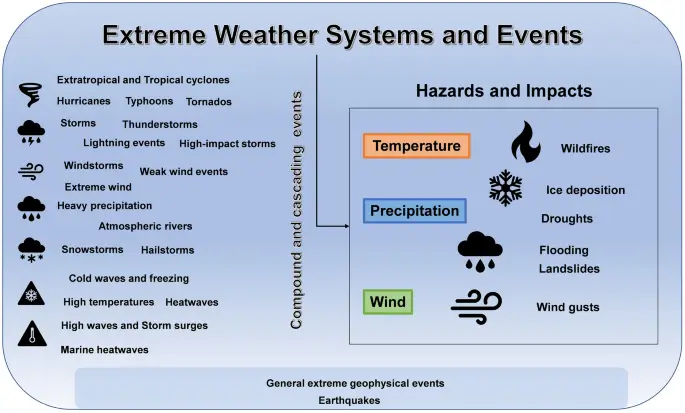
Weather extremes are one of the greatest issues of the present time. Millions of people become the victims of hurricanes and cyclones, floods, and windstorms every year. Storm tracking has become a life-saving mechanism that assists people in preparing in advance before disaster strikes in this unpredictable climate. Communities can have a good time to save lives and property because when it comes to storms, they are aware of the location of a storm, along with the strength of the storm.
Climate change is directly related to the increasing strength of storms. Higher temperatures in oceans, sea rise, and erratic weather conditions are contributing to the intensity and occurrence of natural disasters. The regions that were not subjected to devastating weather conditions in the past are experiencing devastating storms. This has changed preparedness into an important and even a necessary issue for every household, regardless of the place they reside.
Yet, technology is not the only factor of preparation. It is also concerned with community cooperation and awareness, and planning. By integrating effective storm tracking with effective safety-related practices, the residents stand in a better position to reduce damage. This blog examines the working principles of storm tracking, preparedness, and how the world is coping with the challenge of extreme weather conditions.
Understanding Storm Tracking:
What Does Storm Tracking Mean?
Storm tracking, in its simplest form, is a process that involves the tracking, forecasting, and study of the movement of storms. It includes satellites, radars, and weather models to know the location of a storm, its strength, and its direction. This data assists the residents and authorities in making decisions in time.
Storm tracking can be defined in simple terms as a weather GPS. Similarly to how a driver uses a navigation system and evades traffic, the residents apply storm tracking to stay out of trouble. It is not merely knowing when rain is going to fall, it is knowing the direction, strength, and effect of a storm.
Tools and Technologies Used in Storm Tracking.
The current storm tracking is based on the integration of sophisticated equipment. The most common ones are:
- Weather Radars: These determine the intensity of storms and precipitation.
- Satellites: These give real-time pictures of storms that are being formed in oceans and on land.
- Computer Models: Forecast the storm direction based on the past and present data.
- Weather Apps: Take this information directly to local populations’ smartphones in convenient formats.
Such technologies collaborate to give a clear view of the future extreme weather events. Without them, people would be taken by surprise as they would be relying on visual cues such as dark skies or sudden winds.
The Role of Meteorologists in Predictive
Technology is mighty; however, human experience cannot be undermined. Meteorologists analyze the data and decode satellite images as well as describe forecasts in an easy-to-understand language. They are not only to announce a storm they are also to assist people in comprehending what they should do.
As an example, a meteorologist may say that a storm has changed course by 50 kilometers. This might not be much to a layperson, although in fact, this might imply that there is a threat to another town. Meteorologists present such information in an easy, understandable, and actionable manner to the residents.
The Growing Need for Storm Preparedness
Rising Frequency of Hurricanes and Cyclones
Statistical information has indicated that hurricanes and cyclones have been on the rise over the last 20 years. Not only are the storms more frequent, but also more intense. This has necessitated storm preparedness for communities all over the world.
Previously, most individuals used to think that extreme storms could only occur in coastal areas. Today, the storms are going inland, causing floods and devastation to the parts that were considered to be safe. This transformation implies that even small cities and rural locations have to pay serious attention to preparedness now.
Climate Change and Unpredictable Weather Patterns.
Weather patterns are being rewritten by climate change. Storms get stronger due to the process of warming oceans, whereas flash flooding is generated by unusual precipitation. This vagueness renders the use of conventional means of preparation less trustworthy. Individuals who once used seasonal knowledge, like when monsoons were likely to come, can no longer be certain.
The need to have storm tracking has thus been crucial to all residents, be it location. People have to rely on the current information and professional predictions instead of relying solely on previous experiences. Such attitude change is paramount to surviving in the time of unpredictable storms.
Lessons from Communities That Faced Storms Unprepared.
History has numerous examples of the harmful consequences of disregard for preparedness. Whole communities have been destroyed only because they failed to pay serious attention to the storm warnings. An illustration is that in certain places, people did not want to evacuate as they thought that the storm would not strike their place, only to suffer appalling losses.
Conversely, settlements that invested in early storm monitoring, evacuation exercises, and emergency provisions had fewer victims. These are just a few examples that prove only one thing: Preparedness is not a choice, Preparedness is life.
How Residents Receive Storm Alerts
National Weather Services and Alerts
Storm warnings are issued by most national weather services in countries. These agencies use satellites, radars, and meteorologists to monitor the storms in real time. After identifying a possible threat, it is conveyed to the residents via television, radio, and official websites.
As an illustration, in the US, the National Weather Service (NWS) and the National Hurricane Center (NHC) provide warnings to people days before a hurricane hits land. Equally, early warnings of cyclones and heavy rains are issued by the Pakistan Meteorological Department (PMD) in Pakistan. Such official warnings are regarded as the best sources of information since it is supported by governmental sources and scientific knowledge.
Mobile Notifications and Weather Apps
In the digital era of technology, smartphones have turned to be effective storm trackers. Applications such as AccuWeather, The Weather Channel, and Windy provide real-time updates about the storms. Numerous applications notify people of the intensity, direction, and estimated arrival time of a storm in time through the use of push notifications.
What particularly appeals to residents is that these apps can give them location-specific alerts. An example is when a family in Karachi gets specialized cyclone warnings for their area, and residents of Florida get hurricane news for their city. The individualization of the work makes sure that no one is left without preparation.
Community Warnings and Word of Mouth.
In most of the rural and coastal regions, people use community-level warnings. Alerts can be disseminated by local leaders, mosque announcements, churches, and neighborhood groups at a quicker rate than through official means. In some cases, word of mouth may be the most powerful weapon, particularly in regions that are not well-connected to the internet or even the television.
Such a conventional approach, coupled with contemporary solutions, is guaranteed to reach as many people as possible. Human networks are very crucial, even without the use of technology, where they can alert residents of an impending extreme weather.
Practical Steps Residents Take Before a Storm:
Securing Homes and Property.
Securing the homes is one of the earliest activities being undertaken by the residents upon getting the alert of the storms. This involves the use of plywood to reinforce the windows, roof structures, and ensure that the doors are sound enough to resist strong winds. Citizens also bring outdoor furniture, a car, and other loose items inside the home to avoid them becoming a lethal projectile.
The people live in flood-prone regions and usually raise the electric system, cover basements, and construct barriers using sandbags. These precautions are small, but they will help much in mitigating damage in the case of extreme weather.
Stocking Emergency Supplies
Preparedness also refers to the availability of vital supplies to face a storm when one arises. In a good home, there is usually:
- Non-perishable (canned, dry fruits, instant meals, etc.).
- Clean water (not less than 3 days per capita).
- Medicines and first-aid kits.
- Flashlights and additional batteries, nd candles.
- Warm clothes and blankets.
- The essential documents are in waterproof bags.
The supplies will keep one alive in times of power outages or roadblocks when stores and services are shut down. Specialists suggest that people should pack a go-bag to have some basic things and quickly leave the place in case of necessity.
Preparing Backup Power and Communication.
Power cuts are frequently occasioned by storms. In response, lots of households purchase generators, solar chargers, or emergency batteries. It is also important to keep in touch, so the residents should have power banks and additional SIM cards at hand.
The availability of a stable way of communication enables the family members to reach emergency and security services and keep up with the progress of the storm. This training gives security as well as serenity in the midst of disorderly circumstances.
Community-Level Preparation,
Neighborhood Groups and Shelter,
Communities that cook collectively tend to be the strongest ones. In most areas, local neighbourhood groups create storm-preparedness teams. They assist the seniors in finding houses, distribute emergency resources, and refer families to lodging shelters.
In coastal communities, community shelters come in particularly handy. These shelters are constructed with the ability to withstand heavy winds and floods, which offer temporary security to homeless families. The residents are aware of the position of these shelters and the methods of gaining access in case there is an emergency.
Local Government’s Role in Readiness.
Local governments are very important in managing disasters. They organize the evacuation channels, train emergency teams, and arrange community awareness. To give a case in point, the authorities in the city can organize simulated evacuation exercises before storm season as a way of training the residents.
Also, governments make sure that their hospitals, schools, and community centers have facilities to manage storm-related emergencies. In the absence of these efforts, residents would be left powerless against the force of extreme weather.
Evacuation Plans and Drills.
In many cases, evacuation is the safest method when storms are at dangerous levels. Strong preparedness communities develop evacuation exercises so that the families understand what to carry, where to evacuate, and how to move effectively.
The residents are instructed not to take shortcuts and adhere to the official routes of evacuation because roads that have been flooded or damaged may trap the vehicles. Such exercises might be tedious, but when it comes to an actual emergency, they can save millions of lives because the panic and confusion are minimized.
Psychological Readiness
Coping with Fear and Anxiety
The panic can be caused by storm warnings, particularly among families that have children or senior citizens. The stress may arise in anticipation of the storm because one is afraid of losing home or loved ones. Mental serenity and emotional planning, as much as the residents prepare physically, are the advice given by the experts. Unnecessary panic is minimized by breathing exercises, positive communication, and keeping up with the correct information.
When the families talk about storm plans in a relaxed manner, they make the children and the elderly members feel safer. Such psychological stability guarantees faster and clearer decision-making by the time the storm has hit.
Importance of Awareness and Training
Being ready does not only involve being prepared in terms of stocking- it involves being prepared in terms of attitude as well. Most of the communities are currently conducting training to educate people on how to respond in case of an emergency. Such programs involve first-aid training, safe evacuation exercises, and sensitization of possible members of common storm risks.
Trained residents do not just protect themselves, but also aid needy neighbors. Such commonality makes the community more resilient to extreme weather.
Stories of Resilience
Around the world, there are countless inspiring stories of families and communities who faced storms with courage. For example, in the Philippines, residents often rebuild their homes within days after typhoons, relying on strong community spirit. In the United States, survivors of Hurricane Katrina shared how community support kept hope alive even during destruction.
These stories prove that while storms can damage homes and cities, human resilience is stronger when communities stay mentally prepared.
Case Studies: Global Examples of Storm Tracking & Preparation
Residents in the United States.
In the U.S, the country hosts some of the most powerful hurricanes worldwide, especially in Florida, Texas, and Louisiana. The citizens of this area are very dependent on the official warning of the National Hurricane Center. Evacuation orders are not to be ignored, and families tend to pack away food, water, and emergency supplies as part of the so-called hurricane kit several weeks before the hurricane.
Hurricane Katrina (2005) and Hurricane Harvey (2017) demonstrated the possibilities of losing everything due to the lack of preparedness, yet they also demonstrated the significance of monitoring the storms. Today, T.S. citizens are used to tracking storm apps and updates broadcast by the community to be ahead of harm.
Asia: Typhoons and Monsoons
Asian nations such as the Philippines, Japan, and India are prone to typhoons and heavy monsoons. In this case, monitoring of storms is crucial since millions of people reside in towns and villages that are located on the coast. Sirens, text alerts, and community announcements are used by the governments to warn the population.
Technology-driven alerts are used with a culture of discipline in Japan, which is a society that disciplines its citizens by obeying evacuation orders. Conversely, local leaders and word of mouth are more common in rural regions of India. Nevertheless, the similarity is that both were aimed at survival by being early awakened.
Small Islands and Coastal Towns
The Caribbean and Pacific small islands have their own problems, as storms may sweep away a whole area. The inhabitants of this place usually have no way to escape and, therefore, they rely on shelters and governmental assistance. Preparedness involves fortification of wooden houses, supply stocking, and early evacuation planning.
One of the truths that came out in these case studies is that communities that integrate storm following along with practical action are more secure than those that neglect warnings, irrespective of geography.
Role of Technology in Future Preparedness
Artificial Intelligence and Machine Learning
The future of storm tracking is in higher technology. Already, Artificial Intelligence (AI) and Machine Learning (ML) are being applied to forecast the path of storms more precisely. Through processing extensive data collections on climate, AI can offer forecasting that is quicker than standard systems.
This implies that alerts will be communicated earlier, before the residents have time to prepare. Quicker predictions are also helpful to governments to organize evacuations more effectively.
Smart Homes and IoT in Disaster Readiness.
It is also the smart technology that makes individual homes safer. IoT devices will be able to check the weather, determine flooding, and even notify the homeowners about it when they are away. As an illustration, intelligent flood sensors will be able to alert families to increasing water levels before they can become hazardous.
These inventions will enable the residents to integrate personal technology with formal warnings to develop better protection against severe weather.
Empowering Residents Through Technology
One of the largest benefits of technology is, perhaps, that it gives power to ordinary people. Drone, social media, and mobile applications enable residents to post real-time updates. One post on social media that there was a flooded road can save the lives of hundreds of people by diverting traffic.
Technology will trace storms in the future not only but also will connect communities, which is going to result in quicker responses and greater preparedness.
Frequently Asked Questions (FAQs):
What is storm tracking, and why is it important?
Storm tracking refers to the action of tracking and forecasting storms’ movements with the use of satellite, radar, and computer models. The reason is that it provides early alerts to the residents, and they can prepare themselves and minimize harm.
How do residents usually receive storm alerts?
The national weather services, mobile notifications, weather apps, and community announcements notify residents of an impending threat. In the country, local leaders and word of mouth are also included in the dissemination of warnings.
What should be included in a storm emergency kit?
A storm emergency kit must consist of non-perishable food, clean water, medicines, first-aid kits, flashlights, additional batteries, power packs, warm clothing, and valuable papers packed in waterproof bags.
How does technology improve storm preparedness?
The use of modern technology, such as AI, IoT devices, and weather applications, offers real-time warnings and precise forecasts. This enables the residents to be more responsive, ready to act, and to communicate with their communities in the case of extreme weather.
What role do communities play in storm readiness?
The communities are very important as they organize shelters, conduct evacuation exercises, and assist the at-risk members. By collaborating, neighbors curb panic, securing the resources, and saving everybody.
Conclusion:
Extreme weather is no longer an isolated threat, but a current reality that impacts millions of people across the world. The tracking of storms has come to be an important resource, thereby providing the residents with the much-needed time to prepare and defend. It can be hurricanes in the U.S, Typhoons in Asia, and cyclones in the Indian Ocean, but regardless of the type of catastrophe, early awareness is the first step to survival.
Nonetheless, it is not technology that will save lives. Effective preparedness needs both effective storm warnings, effective safety precautions, and effective community collaboration. The families should lock their houses, prepare emergency kits, and be willing to move out when the need arises. Social groups that cooperate in solving problems always have an easy time recovering compared to individuals who are on their own during disasters.
In the future, AI and other technologies that enable a smart home will keep enhancing the tracking of storms. Residents still have the responsibility of being ready. Communities can also deal with extreme weather in a very resilient and confident manner by being informed, planning, and supporting one another. Ultimately, it is not only about safety, but it is also about survival.
